



PAST EVENTS
Click here to view upcoming events.
The Divided City is an urban humanities initiative in partnership with the Mellon Foundation, the Center for the Humanities, and the Sam Fox School at Washington University in St. Louis.
Galvanized by the institutional partnerships, community relationships, faculty collaboration, and graduate student cohorts developed over the past nine years, and with a shared conviction that we have much yet to do, we’re celebrating almost a decade of work.

“‘Saint Pollution’: Aspects of Environmental Literary History in 1870s-1920s St. Louis” with Jason Finch
Tuesday, November 15th, 2022 | 12:00pm | Danforth University Center – Room 276
RSVP for this event here.
Environments and atmospheres of smoke, metal, brick and human/nonhuman encounter recur in the literature of St. Louis during its period of national and international prominence, approximately the 1870s to the 1920s. This body of writing is extensive both in genre and in terms of authors and readers’ diverse positionings. But academic work on St. Louis literary history remains sparse, and is largely concerned with the crisis period of the later twentieth century.
Rather than tracing writers of civic importance or the roots in this city of those who became world famous elsewhere, Jason’s current research seeks atmospheres particular to St. Louis in the period’s rich literary corpus. Environmental case studies selectively examined in his paper include the city’s notoriously smoky air and the impact of transport infrastructures (including in accidents and the role of tracks in dividing urban populations from one another spatially). The noxious industries of St. Louis, centrifugal demographic moves northwards, southwards and westwards, and the pervasive rail yards and streetcar lines of the late nineteenth- and early twentieth-century city echo through poetry, fiction and nonfictional prose by Sarah Teasdale, Kate Chopin, Marietta Holley and Theodore Dreiser. In their 1890s to 1920s texts, the tone is energetic, not elegiac or melancholic like that of later, memorializing, writings by exiles T.S. Eliot and Tennessee Williams, an energy retained in underexamined memoirs from the 1930s to 1950s by the dramatist Orrick Johns and the world champion boxer Henry Armstrong. Methodologically, the paper links literary urban studies with environmental history.
Meet the speaker:
Jason Finch is associate professor in the Department of English Language and Literature at Åbo Akademi University, and principal investigator (Finland) on the European-Research-Council-funded project “Public Transport as Public Space in European Cities: Narrating, Experiencing, Contesting” (PUTSPACE). He has written or co-edited 12 books and special issues, including Literary Urban Studies and How to Practice It (Routledge, 2022) and Deep Locational Criticism (John Benjamins, 2016). Current research focuses on literary London (especially representations of housing and public transport), and on secondary Global North cities and urban regions.
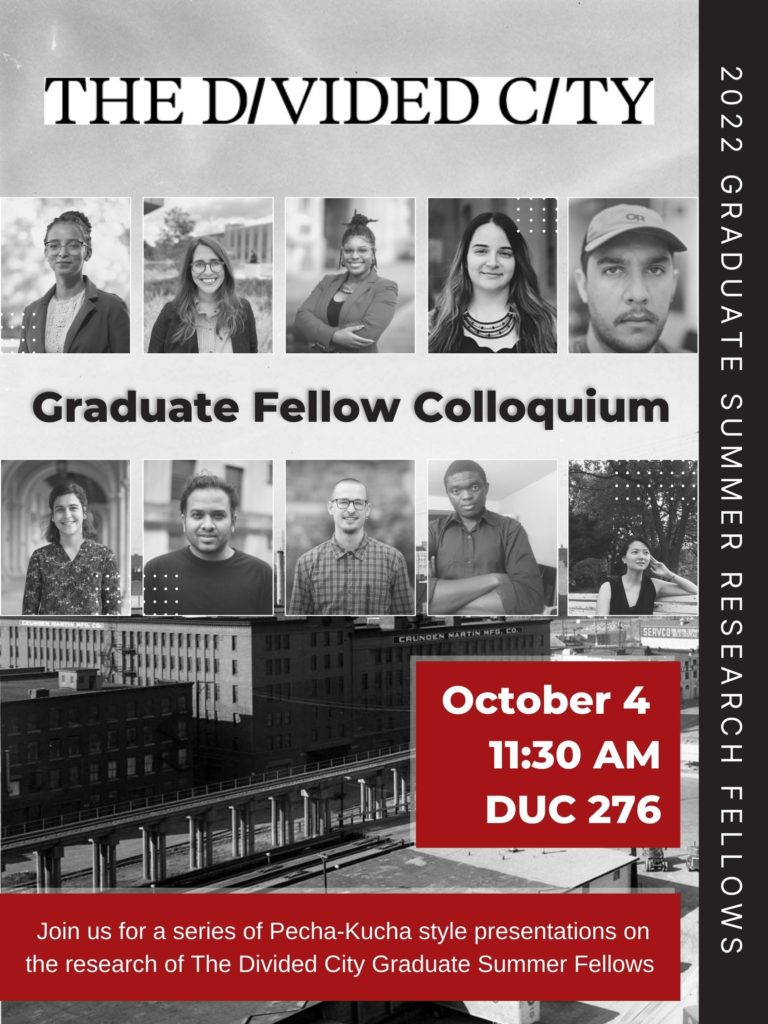
Graduate Fellow Colloquium
Tuesday, October 4th, 2022 | 11:30 AM | Danforth University Center, Room 276
Community Grants: Information Session
Wednesday, August 10th, 2022 | 12:00pm | Zoom
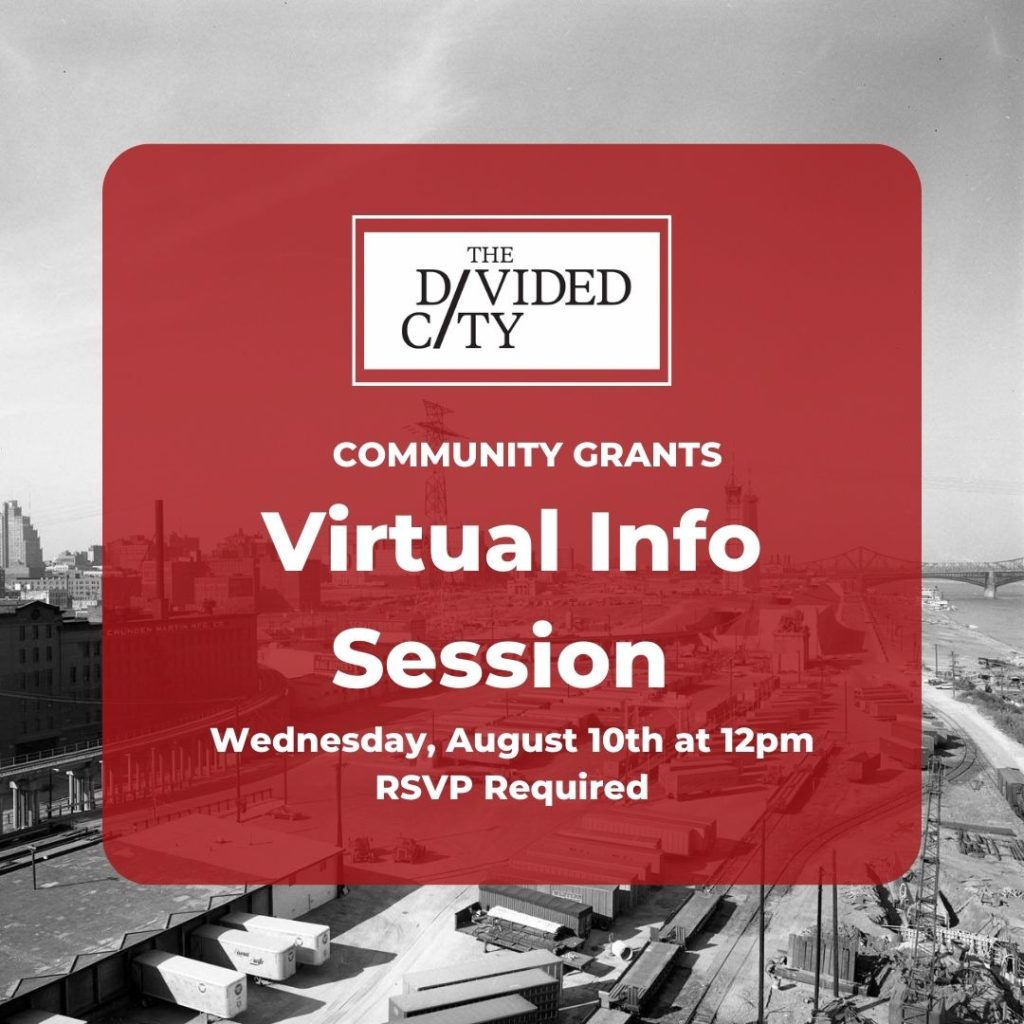
We are now accepting proposals for the third and final round of Divided City Community Grants. Divided City 2022 will offer grants between $5,000 – $20,000 to individuals and organizations in the St. Louis metro area engaged in community work or creative practice related to urban segregation. Members of the St. Louis community can apply without Washington University affiliation.
If you’re interested in submitting a proposal and would like additional information, we invite you to join us for a virtual informational session on Wednesday, August 10th at 12pm. Registration is required.
Please check back soon for a recording of this event.
City Seminar 2022- “And Here They Are Trampling on the People”: Housing, Urbanization, and Revolution in Cuba with William Kelly, Alejandro Velasco and Kimberly Zarecor
Monday, April 25, 2022 | 2:00pm | Zoom
How did the 1959 Cuban Revolution impact the urban housing crisis in Cuba? The notion that housing is a human right was a central pillar of revolutionary ideology. In service to this idea, the new government ostensibly banned evictions in 1959 and nationalized all urban rental property in 1960 with the intent to provide every Cuban with a decent home. But what was the lasting impact of these policies? As Cuban cities fell into neglect and disrepair in the decades that followed, the island’s most vulnerable citizens, including large numbers of Afrocubans, were forced to build illegal communities and face down government demolition brigades as they made claims to the city. Examining their struggles helps us understand how the revolutionary mission to create universal housing access functioned at the ground level.
This talk will be led by William Kelly, ACLS Emerging Voices Fellow at the Center for the Humanities, Washington University in St. Louis, with guest speakers Alejandro Velasco and Kimberly Zarecor.
City Seminar 2022-The House and the City with Daniel Blum
Tuesday, April 12, 2022 | 6:00pm | Kuehner Court, Anabeth and John Weil Hall
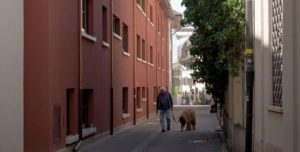
Europe is built. More than two-thirds of the European population lives in cities. This makes the city a “conditio sine qua non” for European architecture. We never face a tabula rasa condition, neither physically nor intellectually.
The resilience of the European city is deeply rooted in its ability to transform, to adapt, to recover. This constant evolutionary process over centuries is transcending built fabric to what we call identity – the individual character of each city – which is often praised but cannot be produced as a whole.
In this sense, each house can be regarded as a tone in the symphony (or cacophony) of a city. Every new house, every refurbishment, is a change in the city fabric that influences its overall tune.
In our recent work, we are reflecting this responsibility toward the city: Each house is an attempt to balance private interests with the demands of the city in a specific place. In this reflection on specific local constellations (always with the city as protagonist), we regard each house as an opportunity to add, adjust, or even heal the fabric of the city in its constant evolution driven by social, economic, and cultural forces.
This talk will be lead by Daniel Blum, a practicing architect and educator, based in Switzerland in collaboration with Petra Kempf, Assistant Professor at the Sam Fox School, College of Architecture at Washington University in St. Louis.
Tuesday, November 30, 4-6 PM: Celebrating Josephine Baker
Location: Graham Chapel, Washington University in St. Louis
On November 30, 2021, the world-famous artist, activist, and humanist Josephine Baker (1906-1975), who was born in St. Louis, will receive one of France’s highest honors: re-burial at the Panthéon, the mausoleum for the country’s most distinguished citizens. In conjunction with this honor, “The Land on Which We Dance: Reclaiming the Spaces of Black Dance in St. Louis,” a Divided City Faculty Collaborative Grant is co-sponsoring two events to honor Ms. Baker here in her hometown. Both are free and open to the public, but advanced registration requested:
For more information, please visit
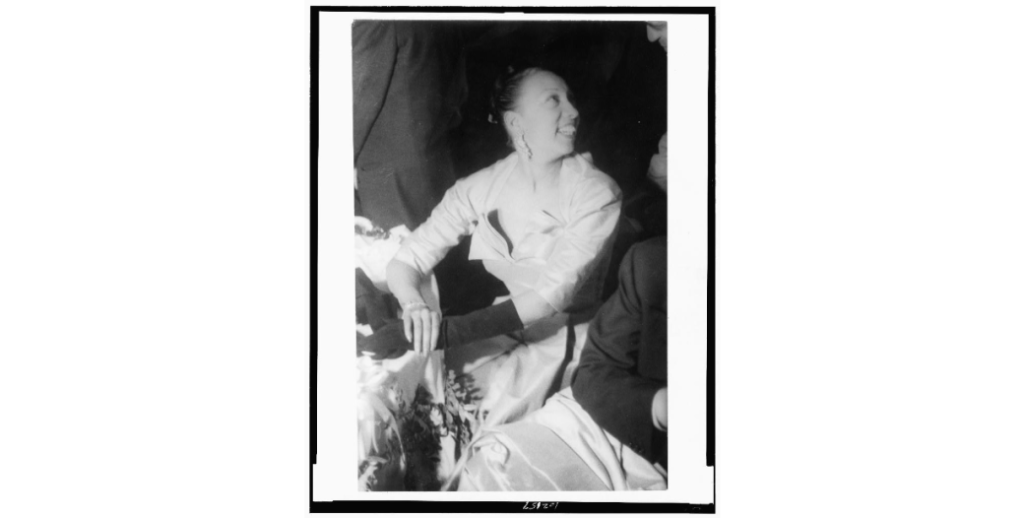
Friday, December 3, 2021, 7-8:30 PM: Josephine Baker: Artist and Activist
Emerson Performance Center, Harris-Stowe State University, 3031 Laclede Avenue
Join us for an evening in partnership with The Griot Museum of Black History to celebrate Josephine Baker through dance performances by Heather Beal, Antonio Douthit-Boyd, Ashleyliane Dance Company, and the Best Dance and Talent Center.
For more information and to register, please visit
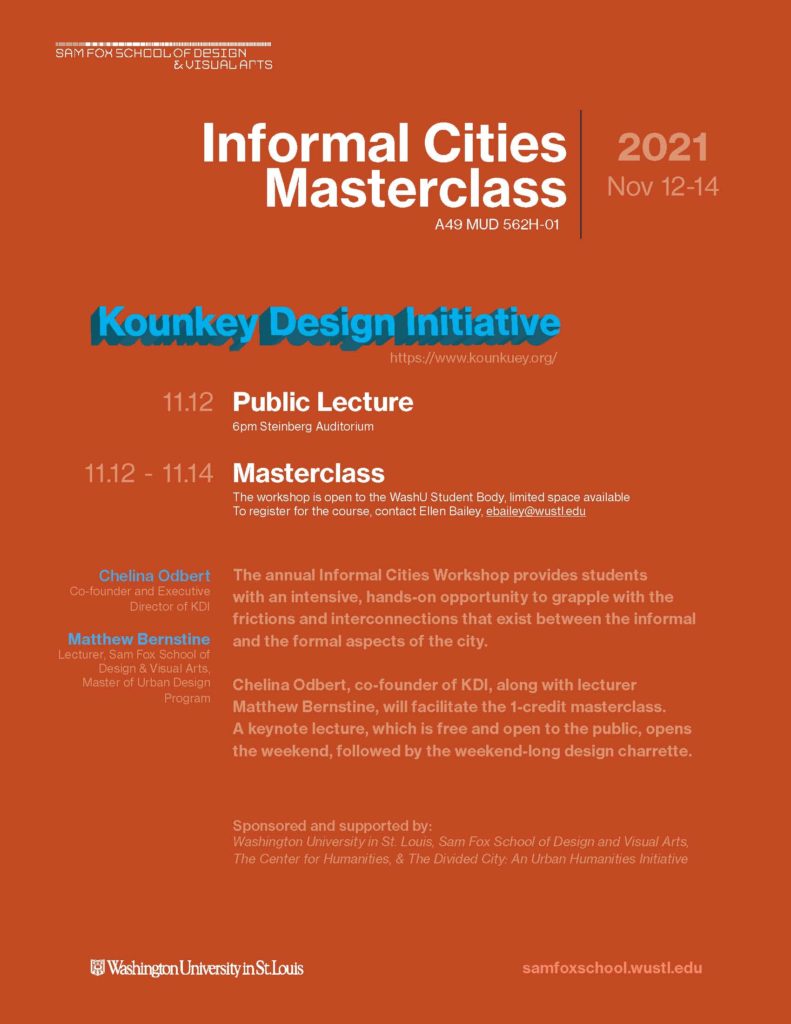
November 12-14, 2021: Informal Cities Workshop Kickoff Lecture: Chelina Odbert
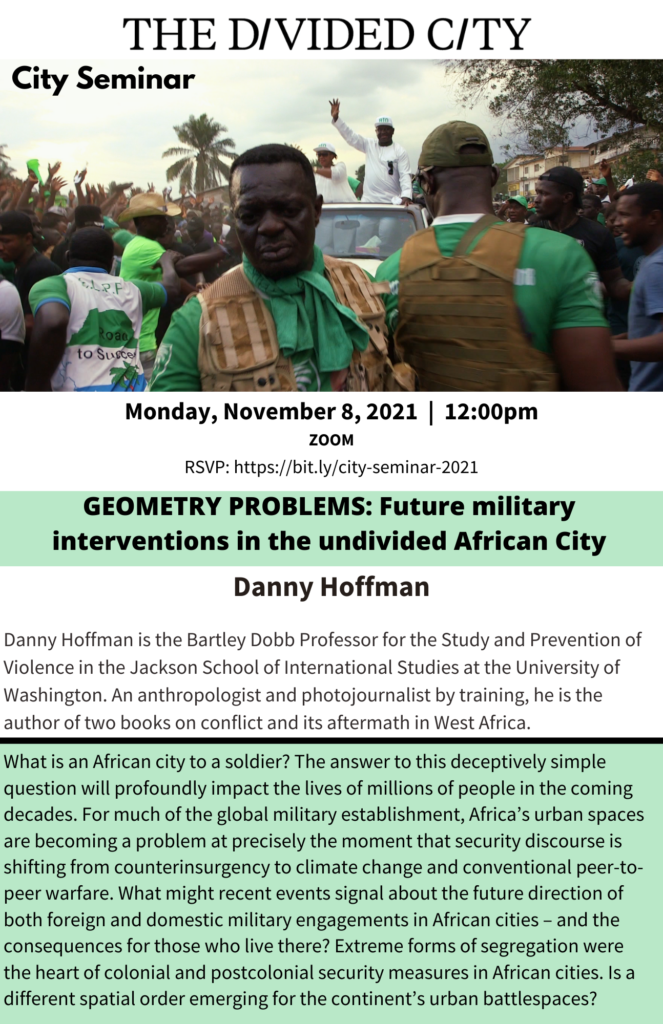
November 8, 2021: City Seminar: Danny Hoffman
Graduate Fellows’ Colloquium
Monday, October 4, 2021 | 12:00-1:30 PM | Zoom
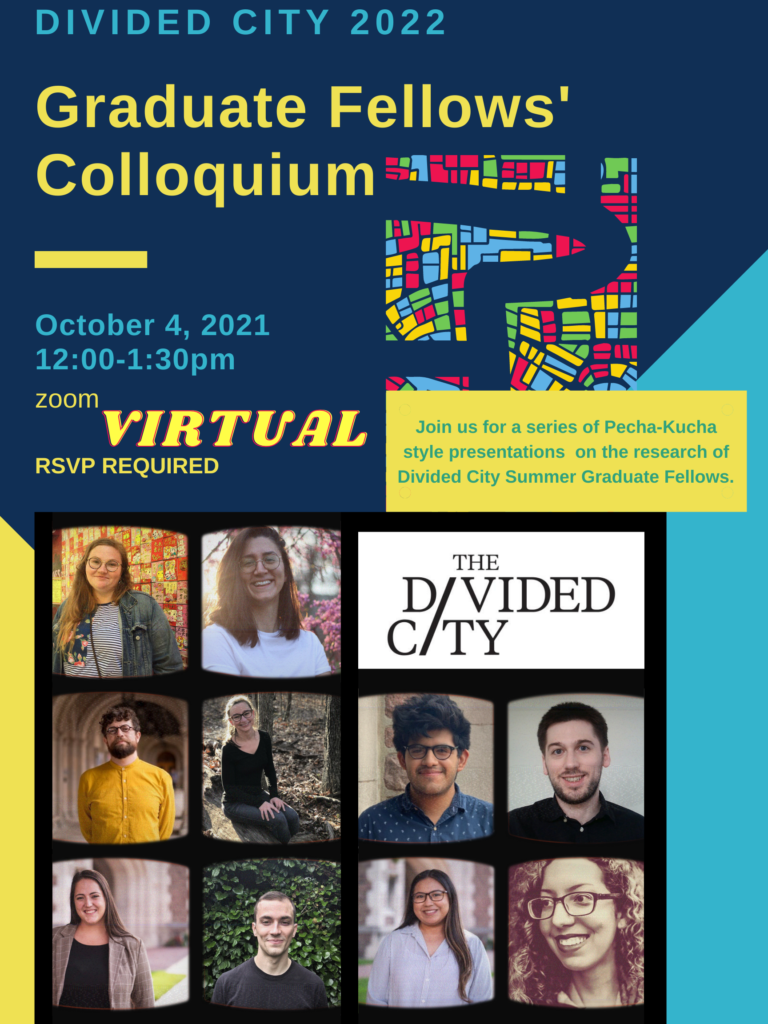
Community Grants Information Session

In July 2021, The Divided City launched its second application cycle of Community Grants and held a meeting to answer questions about the application process and the grant itself. This year’s Community Grants Call for Proposals is available here. Applications are due August 23rd.
Read more about the 2021 Community Grants cycle here.
Read more about last year’s recipients here.
July 14, 2021
Laboratory for Suburbia’s Sprawl Session 2: Black Suburban Imaginaries
Featuring architects Germane Barnes and Mira Henry, artists Davion Alston, Autumn Knight, and lauren woods, scholars Matthew Lassiter and Jodi Rios + more.
Starting with a postmortem on Campaign 2020’s “suburban strategies”, turning to the pivotal Black voter blocks that decided landmark elections in suburban St. Louis and Atlanta, and opening up to address the ways Black spatial imaginaries inhabit and transform suburbanized landscapes of power, Laboratory for Suburbia’s online event considered predominantly Black suburbias as sites—and sources—for critical art and design practice.
Laboratory for Suburbia’s Sprawl Sessions is a series of public exchanges considering strategies for site-specific art and tactical design in the complex spaces of 21st-century suburbia. These extended, casual think tanks for critical suburban practice unfold in long-form online conversations that move away from the standard panel format. The intention is not to offer authoritative statements on suburban art and design practice but to open up questions about it, not to rush to fill the gap in practice at the heart of the project but to publicly inhabit it. With numerous invited participants and space for an audience of invested practitioners and scholars to engage in dialogue, attendees are encouraged to treat the sessions as salons, dropping in and out as schedules allow (or catch the archived video).
A recording of this event is available on our Video Archive and on YouTube.
June 29, 2021
Virtual City Seminar: “Marking Time: Art in the Age of Mass Incarceration” with Nicole R. Fleetwood
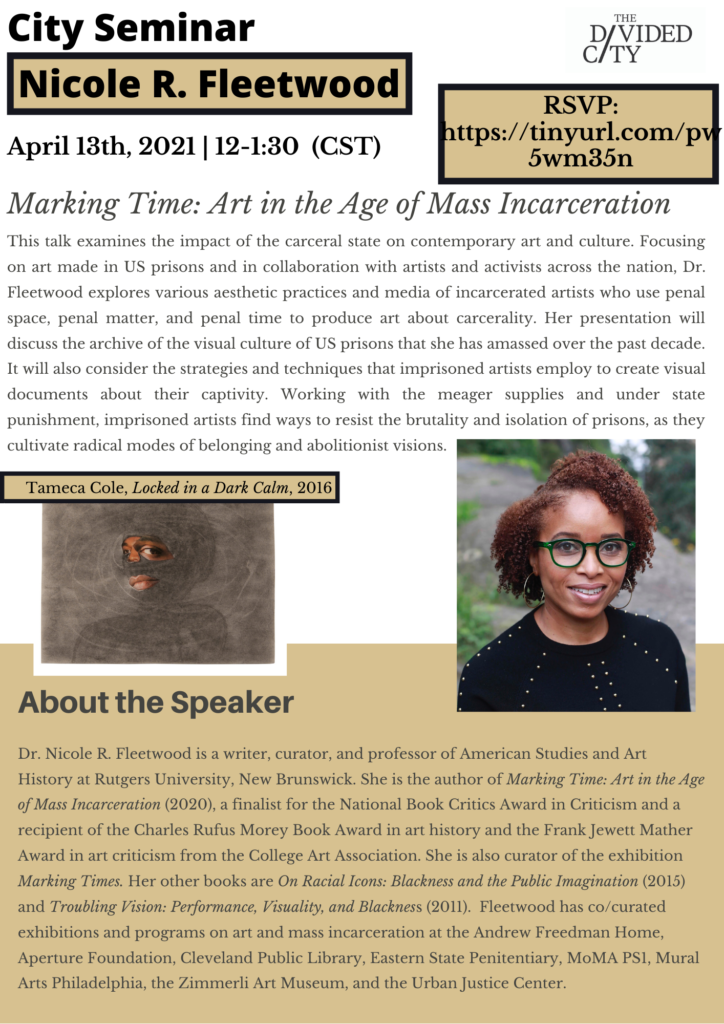
A recording of this event is available on our Video Archive and on YouTube.
April 13, 2021
Virtual City Seminar: “Building Educational Justice in Alabama Prisons: What’s Love Got to Do with It?” with Kyes Stevens
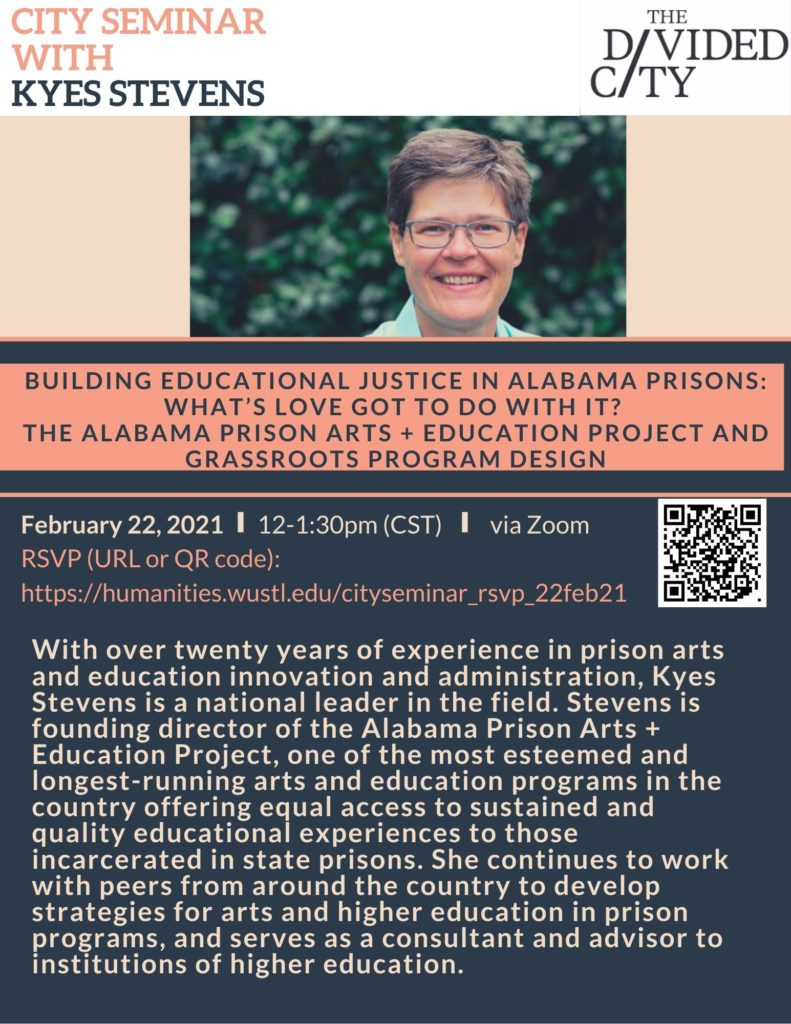
A recording of this event is available on our Video Archive and on YouTube.
February 22, 2021
Virtual City Seminar: “Global Displacement and Local In-Placement: Transnational Stories of Rustbelt Revitalization” with Faranak Miraftab
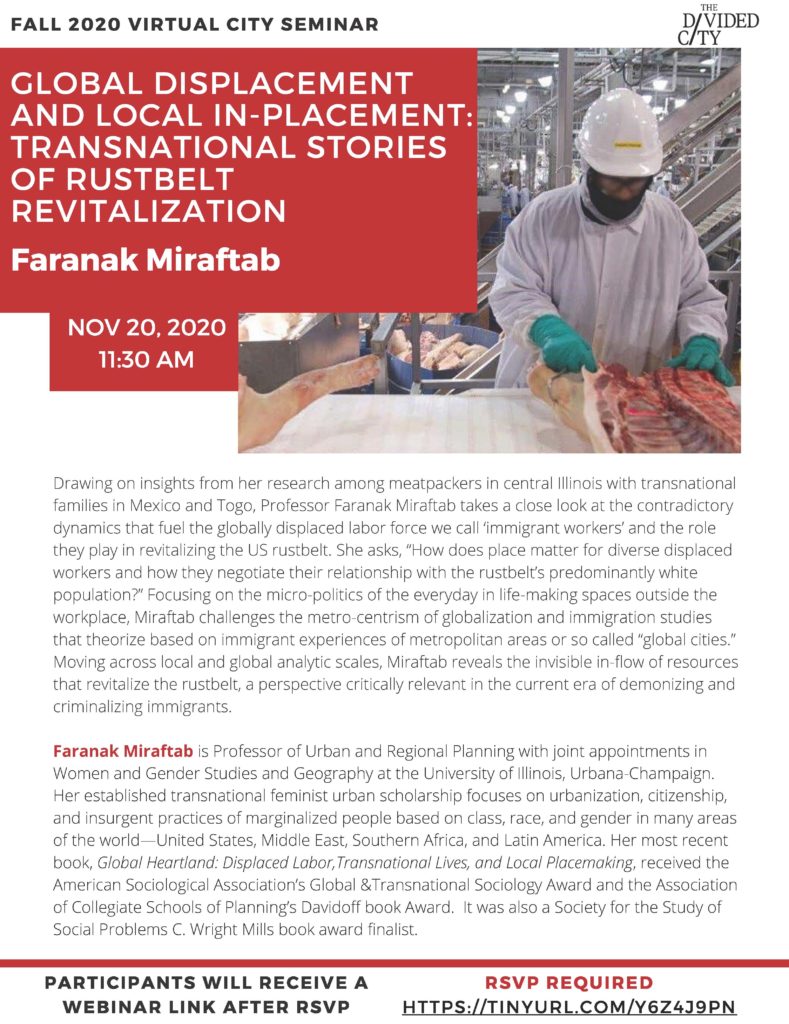
November 20, 2020
Laboratory for Suburbia Book Launch
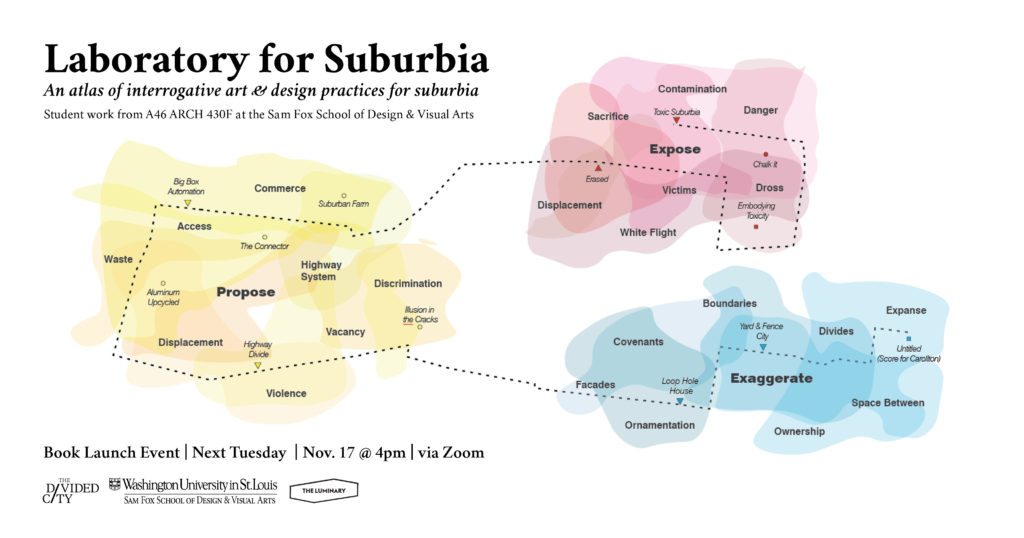
This event celebrated a new book of student work from last spring’s Laboratory for Suburbia seminar at the College of Architecture and Graduate School of Architecture & Urban Design.
The course, taught by Laboratory for Suburbia’s lead organizer Gavin Kroeber, engaged thirteen students in a critical exploration of suburban spaces and their potential implications for design praxis. After the Covid-19 pandemic forced the cancellation of a planned exhibition of student projects, the class assembled their collective work as a book that could still convey the projects’ spatial arrangement. Edited by student curators Emily Bryan and Jess DeAngelo, the resulting publication is an exhibition in the form of a book. It functions as an atlas of interrogative art and design practices organized into “neighborhoods” that trace connections between individual projects and invite readers to engage with the propositions they make.
The editors facilitated a brief discussion about the process of creating the book against the constantly shifting, often fraught, backdrop of the Covid-19 pandemic and racial justice protests, and considered student projects in light of the recent divisive election season.
A PDF of the full book is available here.
November 17, 2020
Divided City Graduate Fellows Presentation
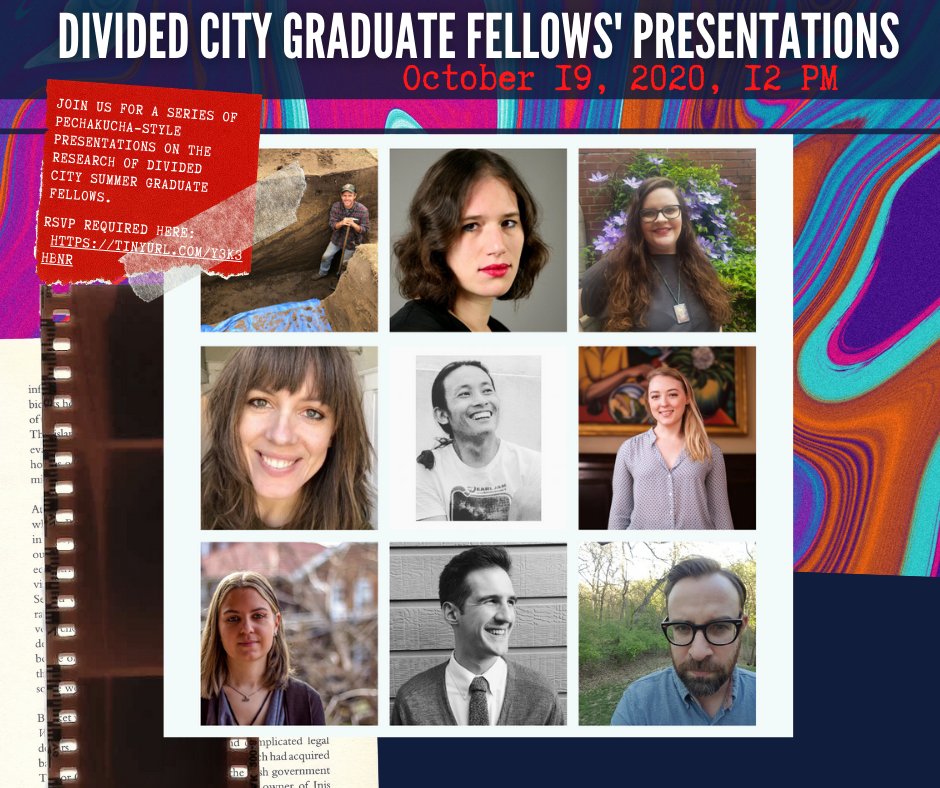
October 19, 2020
Laboratory for Suburbia “Sprawl Session 1: White Suburbias”
Laboratory for Suburbia is a Divided City faculty collaborative grant project and launches with the first in a series of online “Sprawl Sessions”—public exchanges considering strategies for site-specific art and tactical design in the complex spaces of 21st-century suburbia.
The first event, Sprawl Session 1: White Suburbias, interrogated the possibilities and challenges for interventionist art and design practice in predominantly white suburban spaces. Featured discussants included architects Keith Krumwiede and Bryony Roberts, artists Eric Gottesman (For Freedoms), Sarah Paulsen, Dread Scott and lauren woods, historian Walter Johnson, and Gavin Kroeber, instigator and lead organizer for Laboratory for Suburbia.
A recording of the webinar is available on YouTube. More information about the project available here.
October 16, 2020
Panel Discussion: The Lively Cities
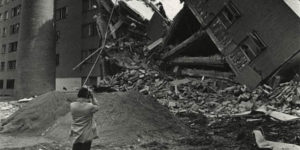
This virtual panel explored how social distancing practices in response to the COVID-19 pandemic are challenging our conceptions of urbanity, leading us to question how we share public spaces as social infrastructure and what “future normality” will look like as restrictions lift and we regain a more active city life. The webinar marked the culmination of a weeklong workshop for Master of Urban Design students led by visiting professor Oliver Schulze, partner of the Copenhagen-based studio Schulze+Grassov, and Divided City visiting lecturer Mohammed Almahmood, head of research & innovation for Schulze+Grassov, as part of the summer 2020 MUD Global Urbanism Studio.
More information about this event is available here. Watch the full recording of the webinar here.
June 19, 2020
2020 Day of Dialogue & Action: Dialogue Session #2 Divided City
Clark Fox Forum with Denise Ward-Brown, Larissa Sattler, Carolyn Gaidis, moderated by Tila Neguse.
February 19, 2020
“Informality as History” with Brodwyn Fischer
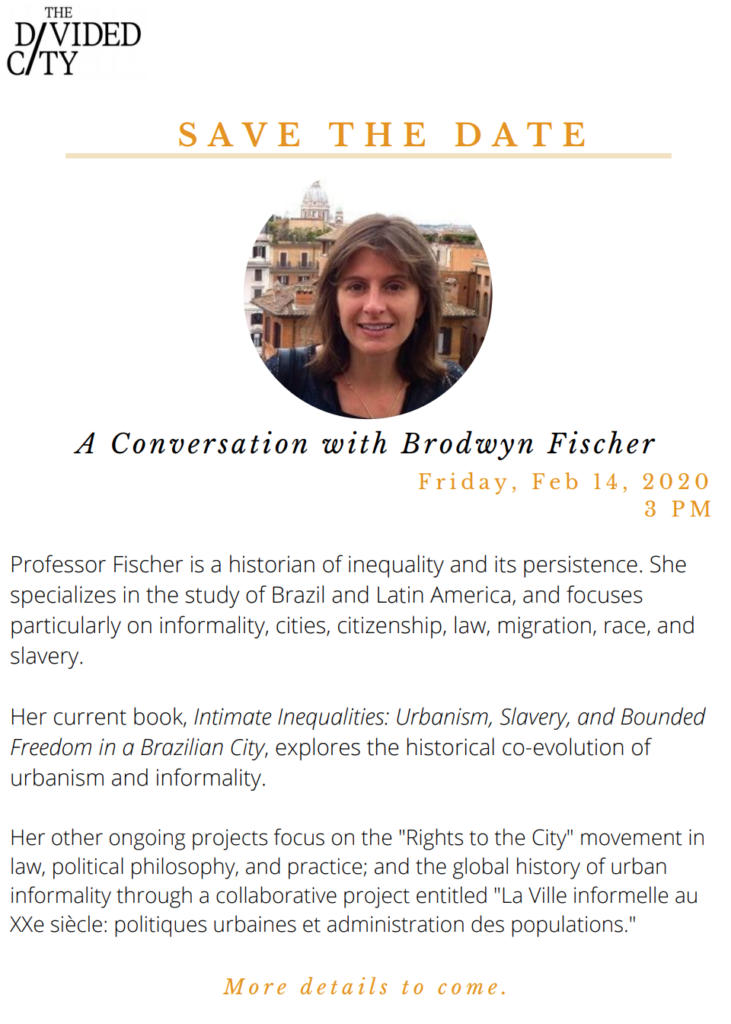
This event is presented as part of the faculty collaborative project, Making and Breaking the Public.
February 14, 2020
“Design Justice: Power + Place” with Bryan C. Lee, Jr.
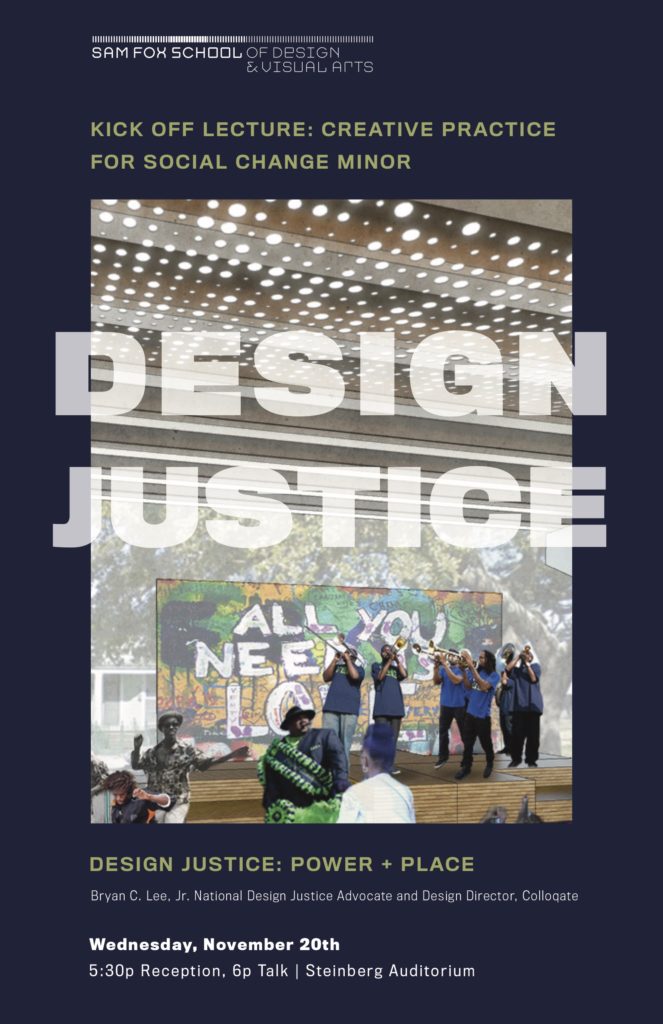
A design justice advocate and design director of Collogate, Bryan C. Lee, Jr. delivered a public lecture to kickoff Sam Fox’s Minor in Creative Practice for Social Change. He looked at the history of the design justice movement and how the theory of practice continually advocates for the dismantling of power ecosystems that use architecture and design to create injustice throughout the built environment.
More information on this event is available here.
November 20, 2019
Informal Cities Workshop Kickoff Lecture with Geeta Mehta
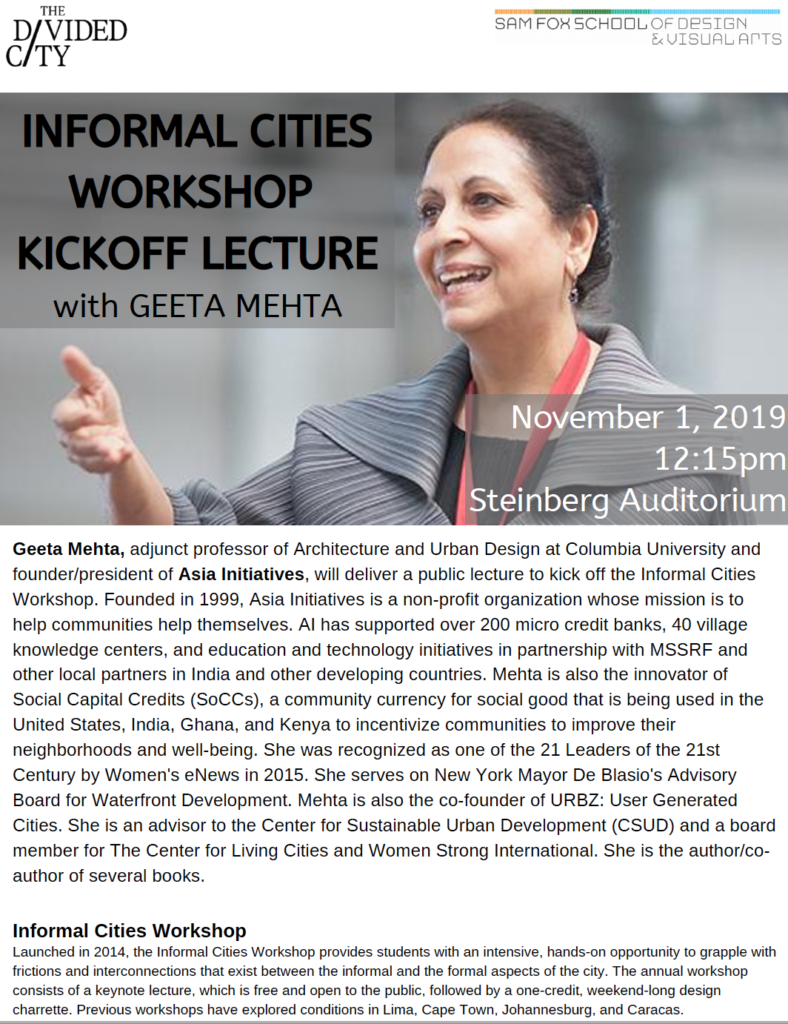
A recording of this event is available on our Video Archive and on YouTube. More information about this event and the Informal Cities workshop available here.
November 1, 2019
“Insurgent Public Space Making,” A workshop with Jeffrey Hou
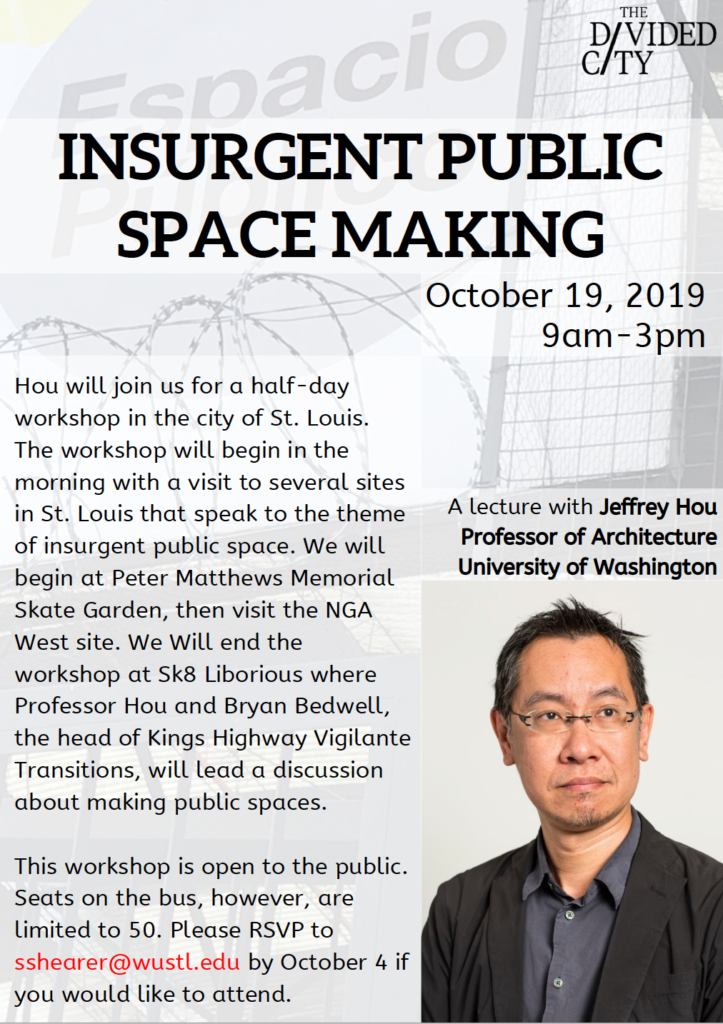
This lecture formed part of the faculty collaborative project Making and Breaking the Public.
October 19, 2019
“Anthropocene Vernacular: Industry, Indigeneity, Empire”
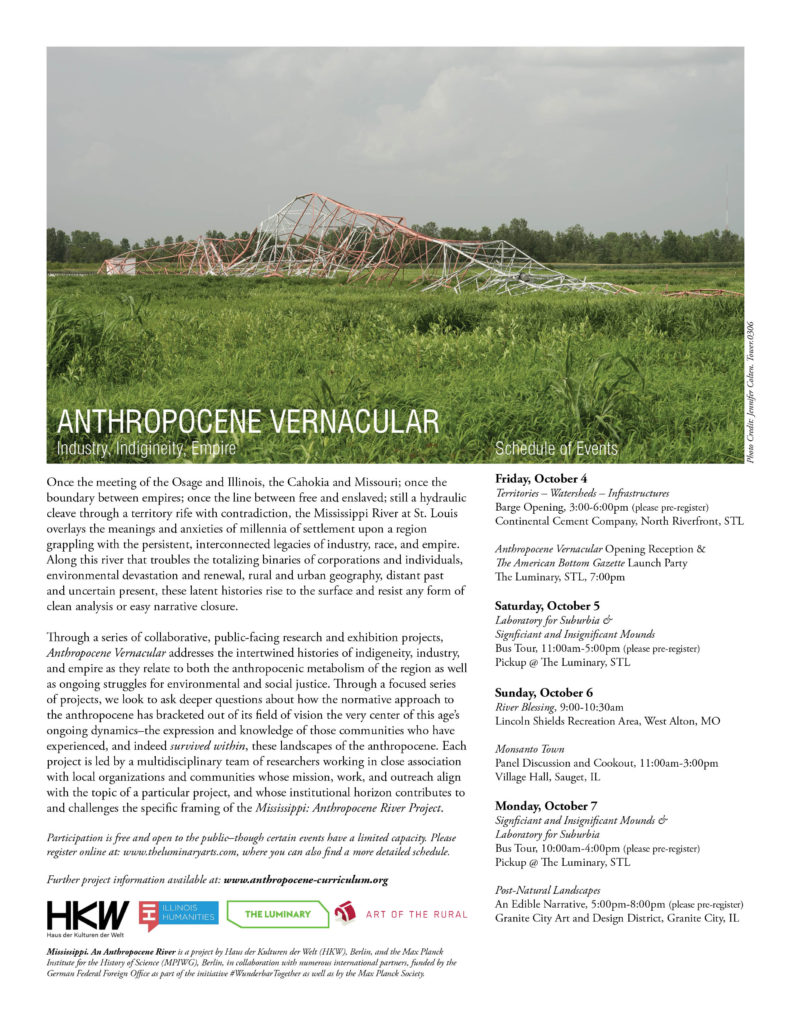
Representing multiple Divided City projects, this public program spans the St. Louis region through experimental tours, an edible narrative, a community cookout, oral histories, public mappings, and a barge laboratory, alongside a range of research, writing, and publications.
More information about the “Anthropocene” curriculum is available here.
Associated faculty collaborative projects: Charting the American Bottom and Laboratory for Suburbia
October 4-7, 2019
Divided City Graduate Student Fellow’s Presentations
September 25, 2019
“Tool Shed”: An Exhibit
Through the Contemporary Art Museum, Artist Eric Ellingsen gave “walkshops” around St. Louis to create aural archives and portraits to understand the history of segregation. Participants carefully observed and recorded neighborhood soundscapes, such as those of pedestrian and car traffic or emergency sirens.
This exhibit formed part of the faculty collaborative project Sound of Segregation. More information about “Tool Shed” is available here. Listen to Ellingsen’s sound archive here.
May 17 – August 18, 2019
Segregation by Design: Conversations and Calls for Action in St. Louis
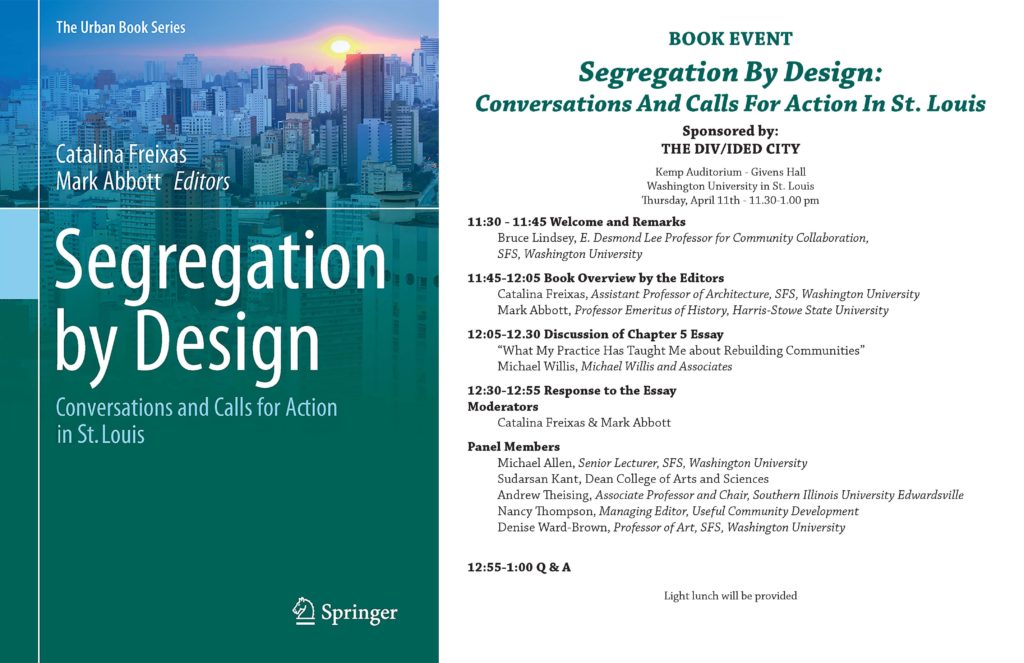
More information about the volume Segregation by Design is available here.
April 11, 2019
City Seminar: “Facing Segregation” Speaker & Discussion Series
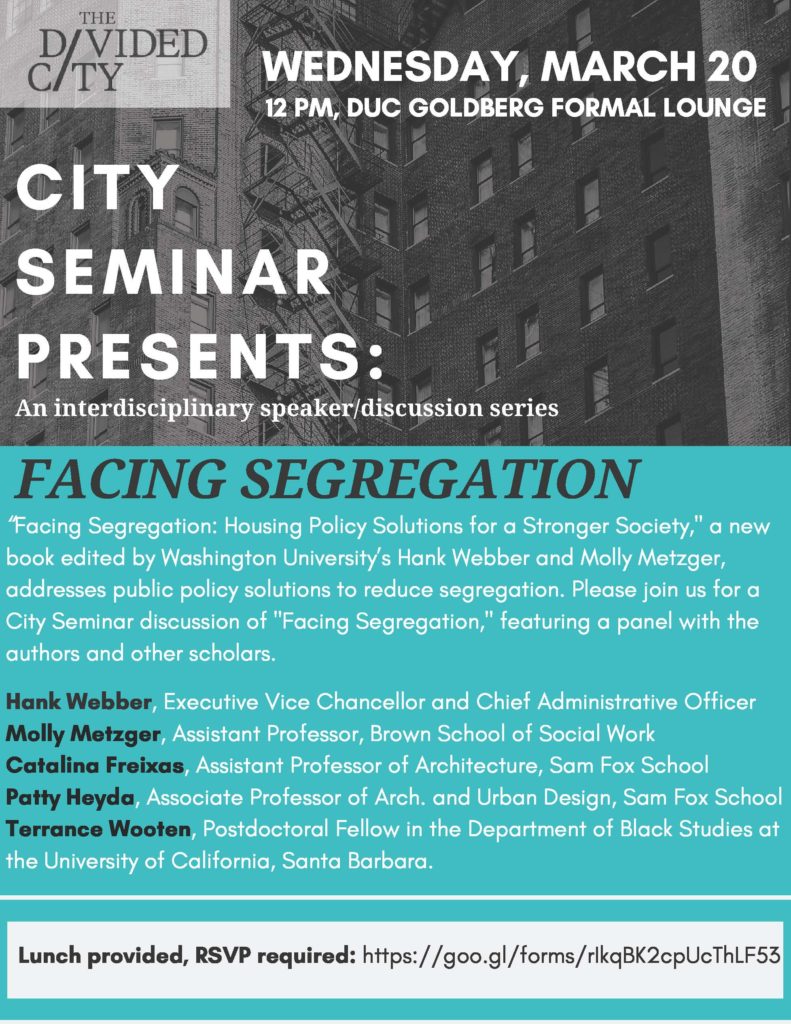
More information about the volume Facing Segregation is available here.
March 20, 2019
“Black Imagination Matters” with V. Mitch McEwen
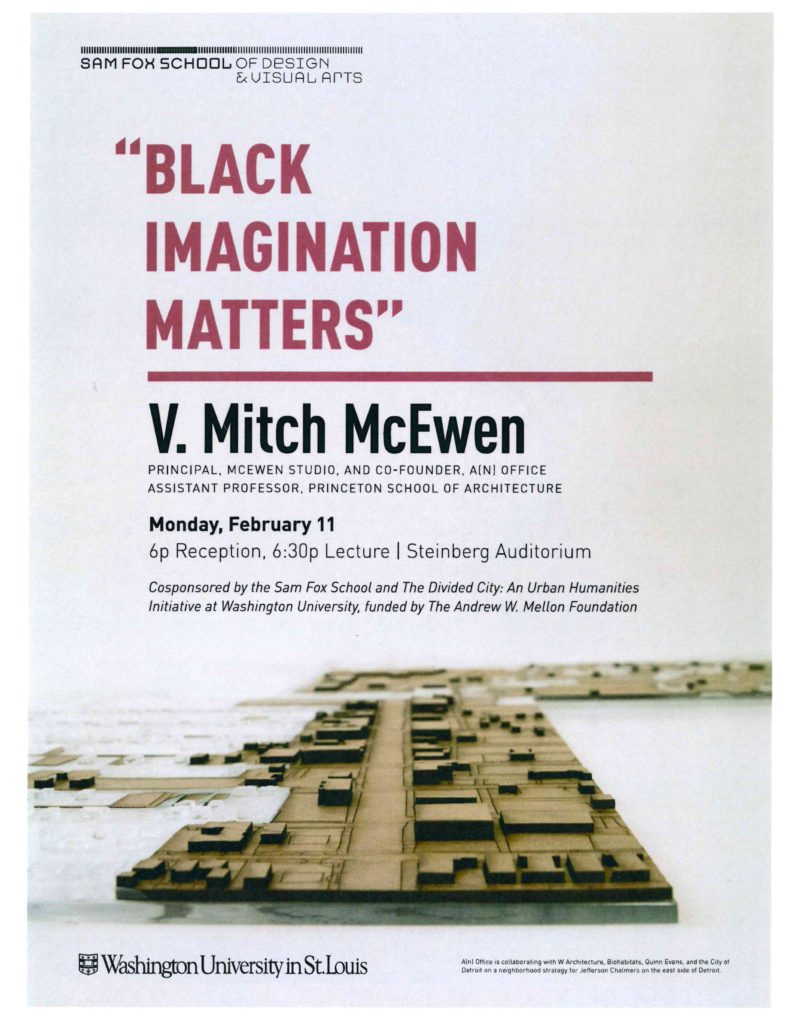
This lecture formed part of the faculty collaborative project Dwell in Other Futures.
More information about McEwen’s talk is available here.
February 11, 2019
“Impact HIV/AIDS” Film Screening and Panel Discussion at the Griot Museum
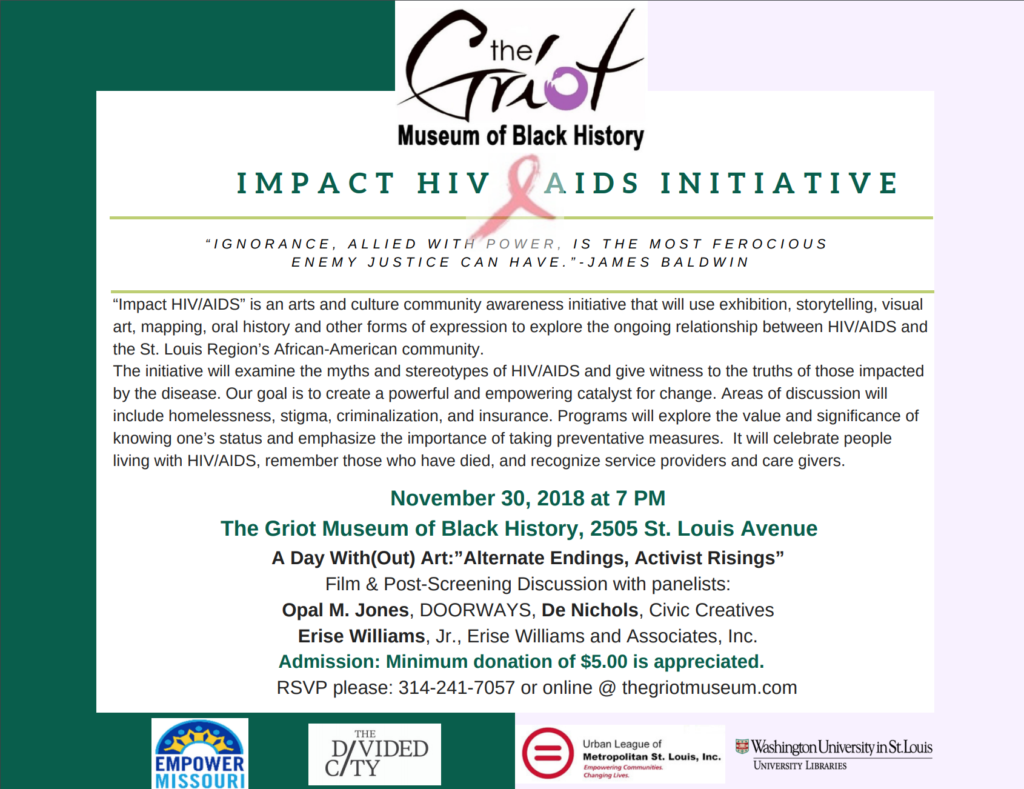
Griot’s “Impact HIV/AIDS” initiative marked the 50th anniversary of the death of Robert Rayford, a young black man recognized as the first in the U.S. to pass from HIV/AIDS in 1969. This film screening and related events honored Rayford’s memory and that of others like him by creating an archive and storytelling venues around those affected by the virus, particularly in St. Louis’ African American communities.
November 30, 2018
“The Sentence” Film Screening and Post-Film Discussion
Film Screening of Rudy Valdez’s The Sentence, with an introduction and post-film discussion by Tila Neguse, Project Coordinator of The Divided City Initiative.
More information on this film is available here.
November 9, 2018
“Strategies for Urban & Social Articulations” with Jorge Mario Jáuregui

More information about this event and the Informal Cities workshop available here.
November 2, 2018
“KHF” Documentary Screening
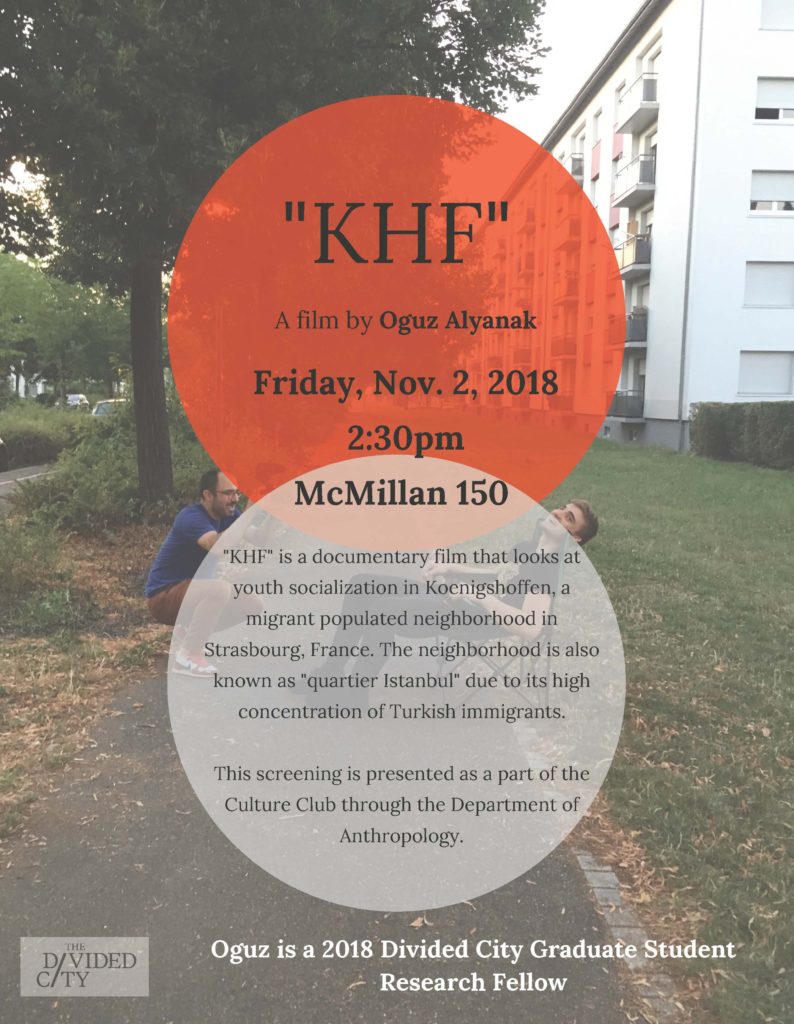
During the summer of 2018, as a part of his Divided City research fellowship, Oguz Alyanak, traveled to France to conduct research on this film project.
A trailer for the documentary is available on YouTube.
November 2, 2018
Divided City 2022 Launch Event
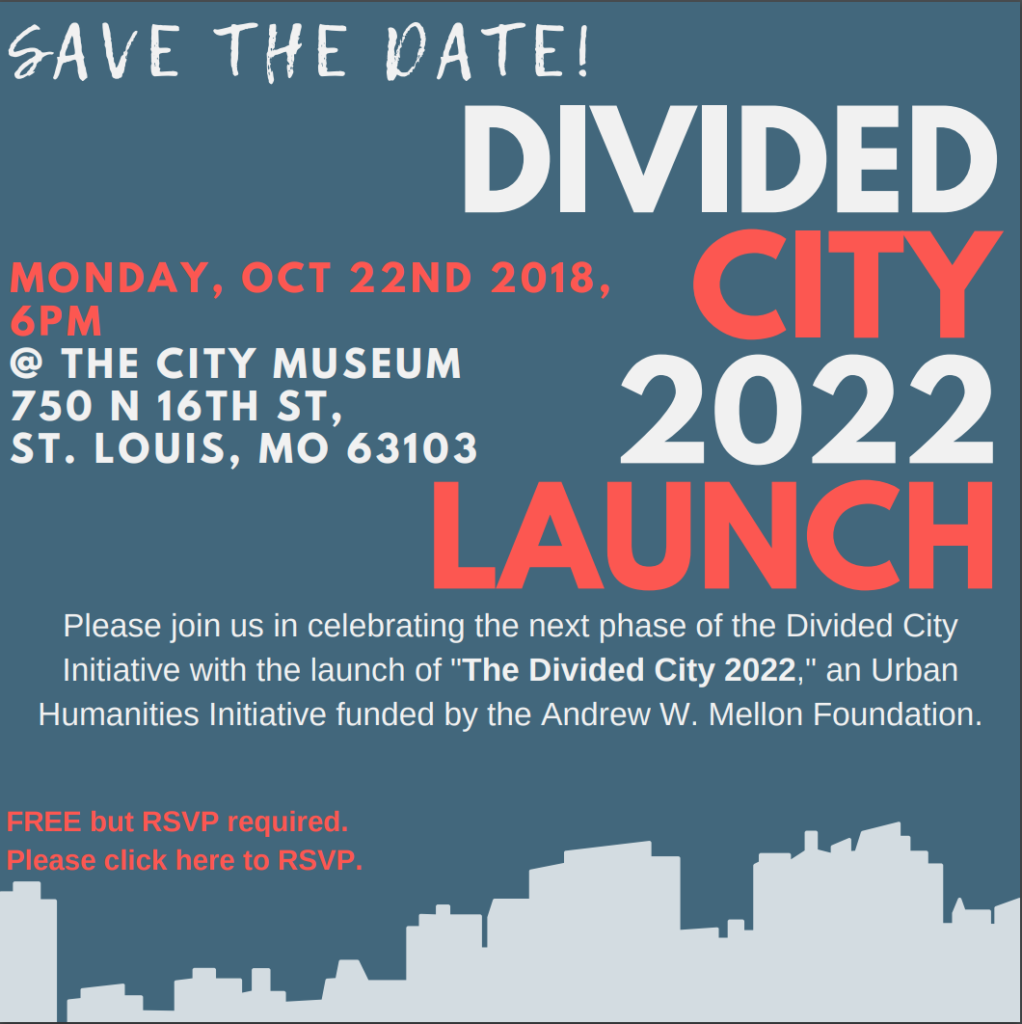
This event marked the beginning of Divided City Initiative’s second phase, for which it earned a $1 million grant from The Andrew W. Mellon Foundation in 2018. In addition to continuing the research and programs it has supported since its beginning in 2014, the Divided City 2022 will add an annual Informal Cities workshop, new urban humanities coursework for WashU’s Prison Education Project, and undergraduate and graduate programs and a Studiolab in urban humanities.
More information about the Launch is available here.
October 22, 2018
Divided City Graduate Fellows Presentations
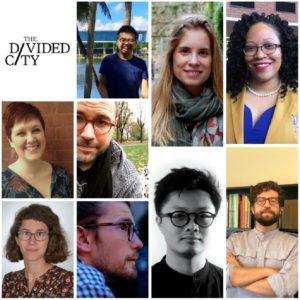
A recording of this event is available on our Video Archive and on YouTube.
October 1, 2018
“Black Love and Black Rage in America: The Burden of Hope” with Christopher Lebron
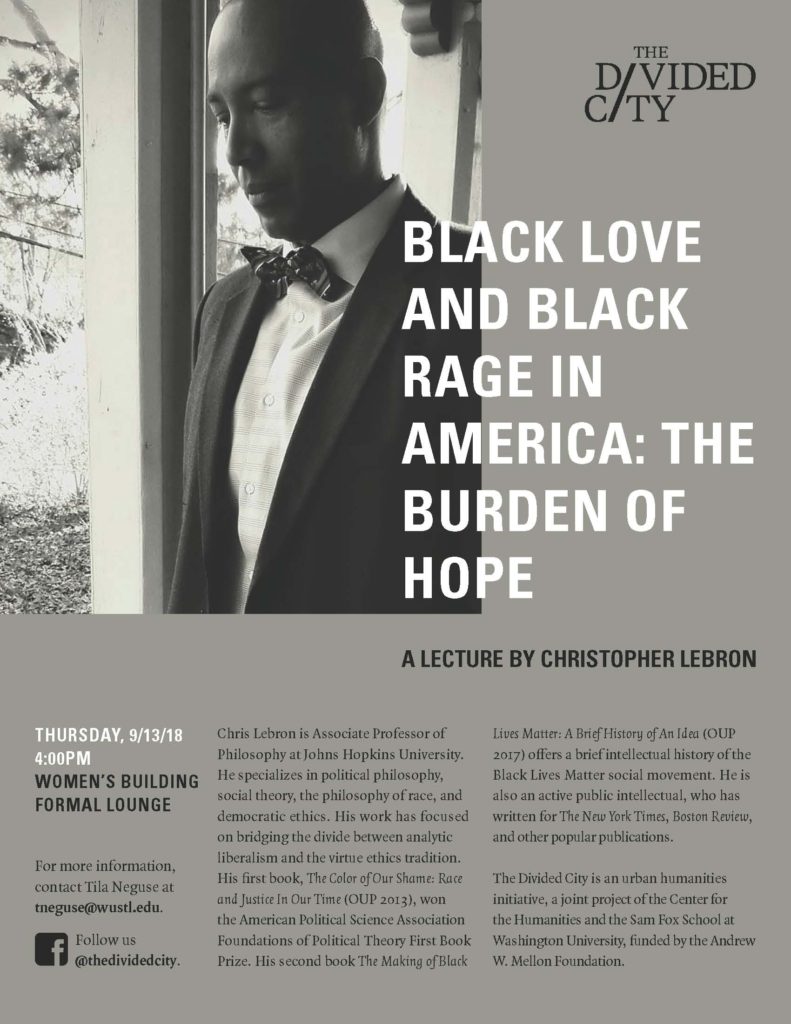
September 13, 2018
Summer City Seminar: A Compendium of the Divided City
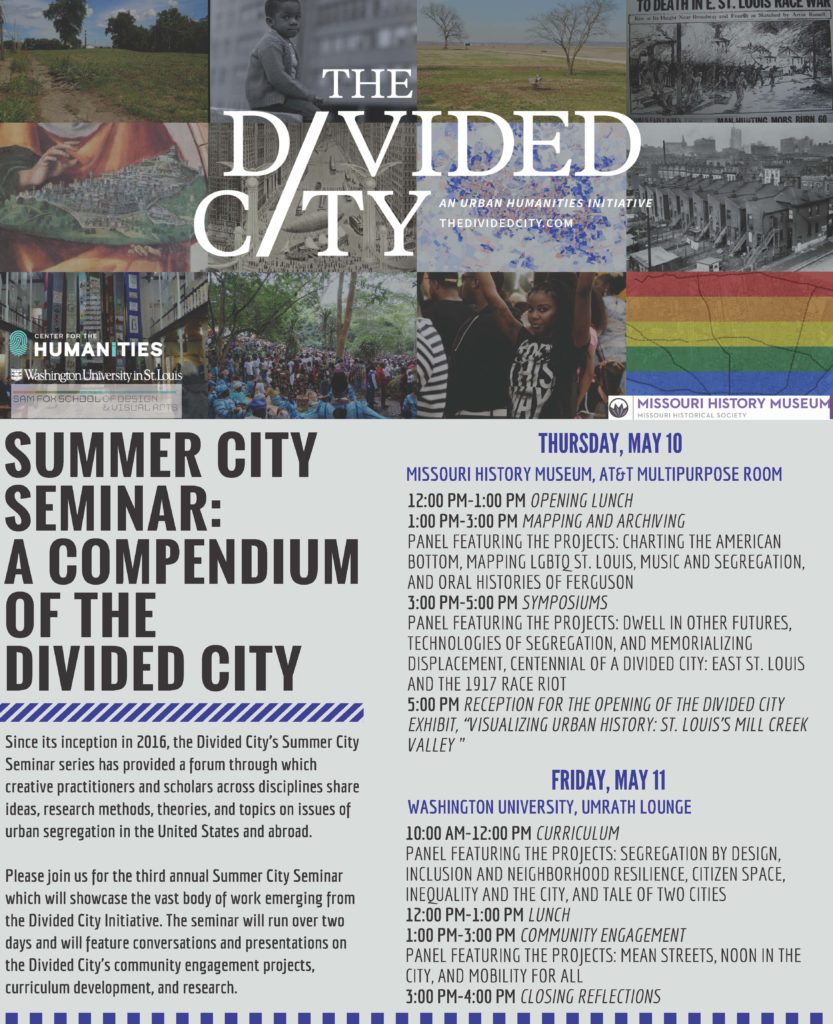
Recordings of this Compendium are available through our Video Archive.
More information about the event is available here.
May 10-11, 2018
Screening of Student Videos: “Tale of Two Cities: Documenting Our Divides”
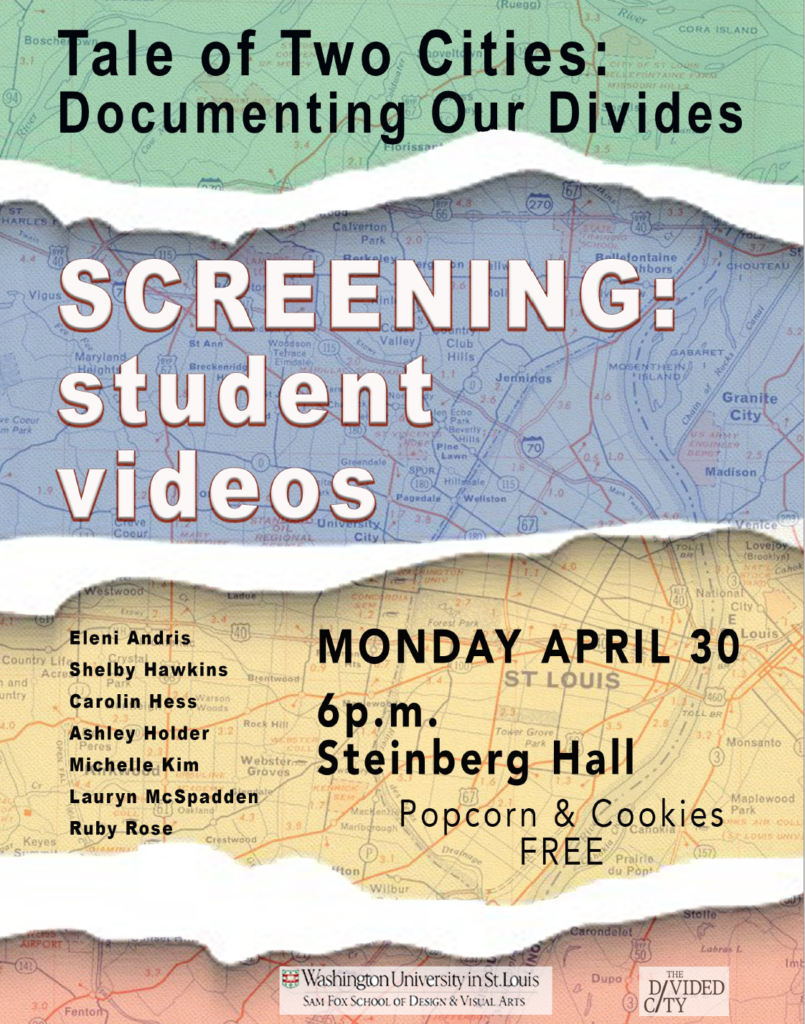
The faculty collaborative project Tale of Two Cities: Documenting Our Divides brought together students from across campuses to engage with local community organizations. Students created documentary videos to capture the immediacy of the current historical moment.
April 30, 2018
[De-]Segregation by Design in Divided Cities
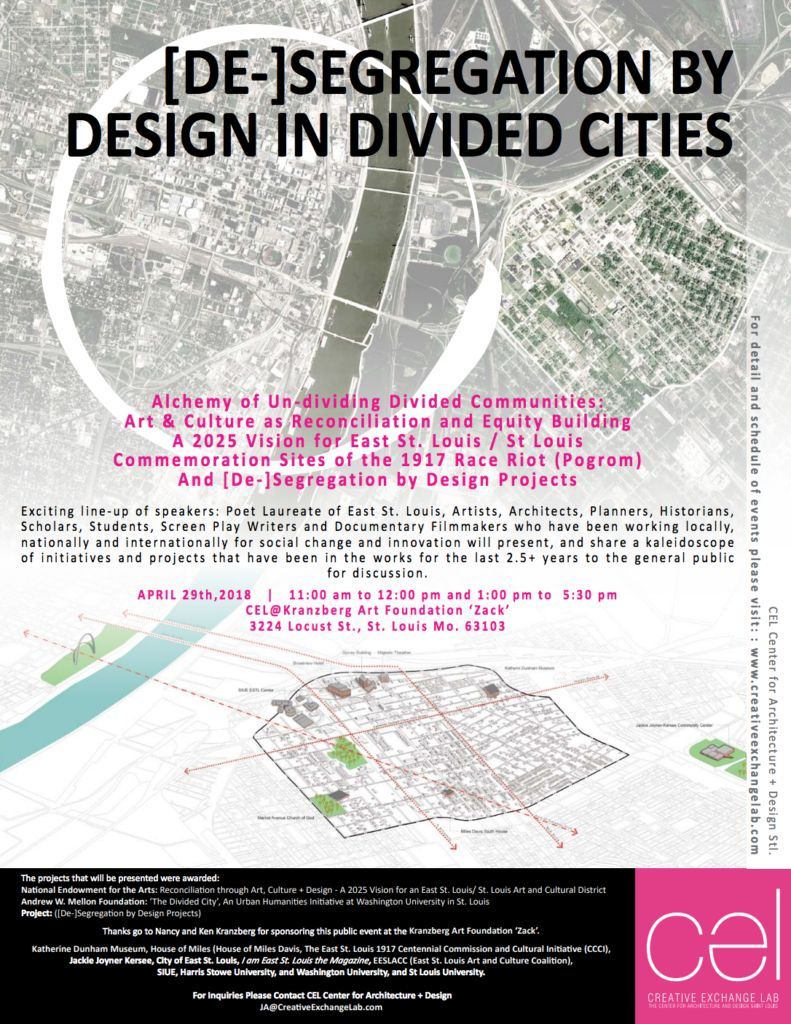
April 29, 2018
“The Color of Medicine: The Story of Homer G. Phillips Hospital” Film Screening and Q&A
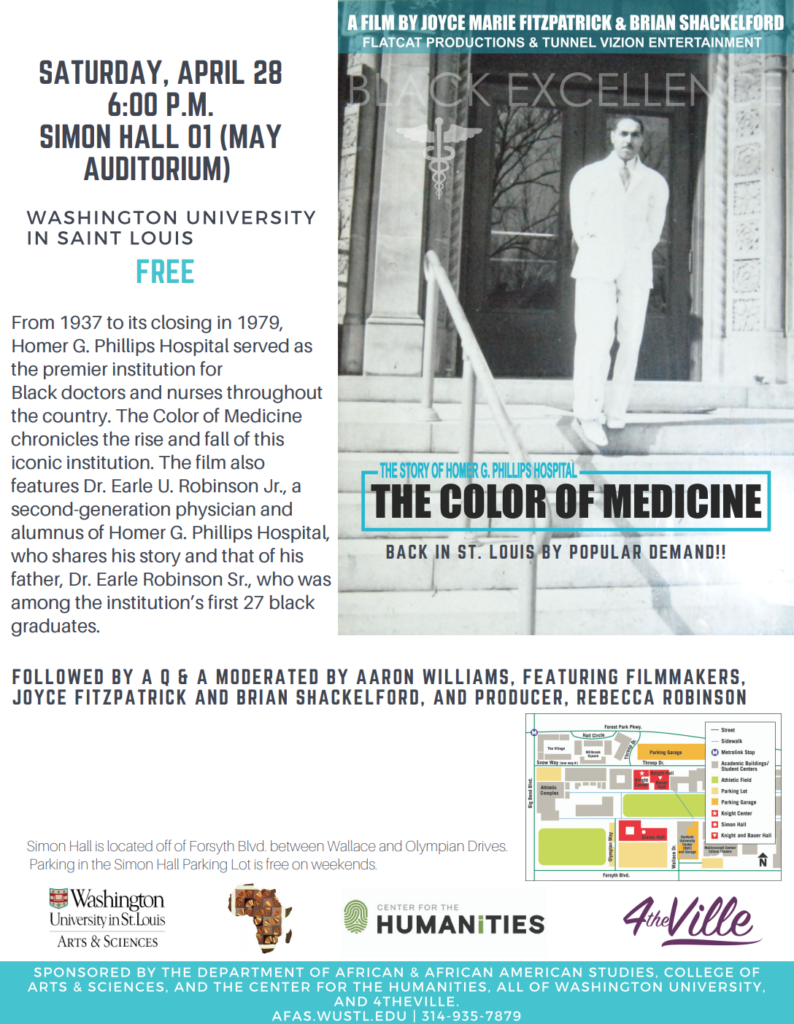
More information about the film is available here.
April 28, 2018
Festival: “Dwell in Other Futures: Art/ Urbanism/ Midwest”
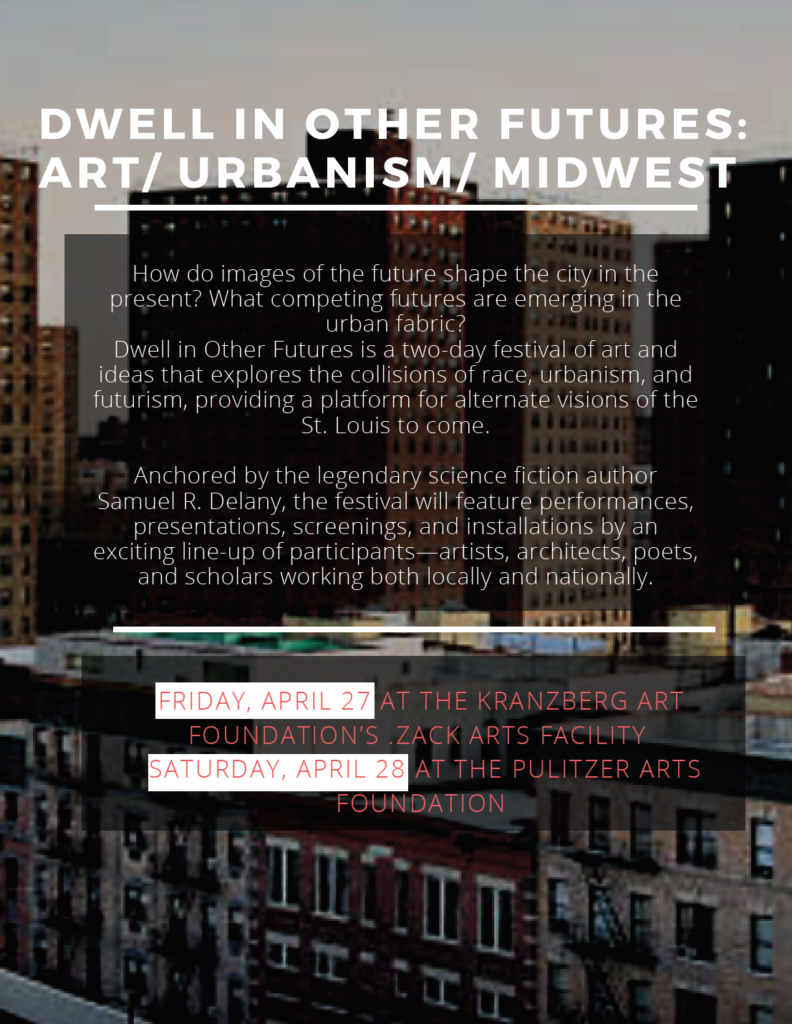
This Symposium formed part of the faculty collaborative project Dwell in Other Futures.
More information about the festival and project is available here.
April 27-28, 2018
Spring Symposium: “Technologies of Segregation in Early Modern Italian Cities”
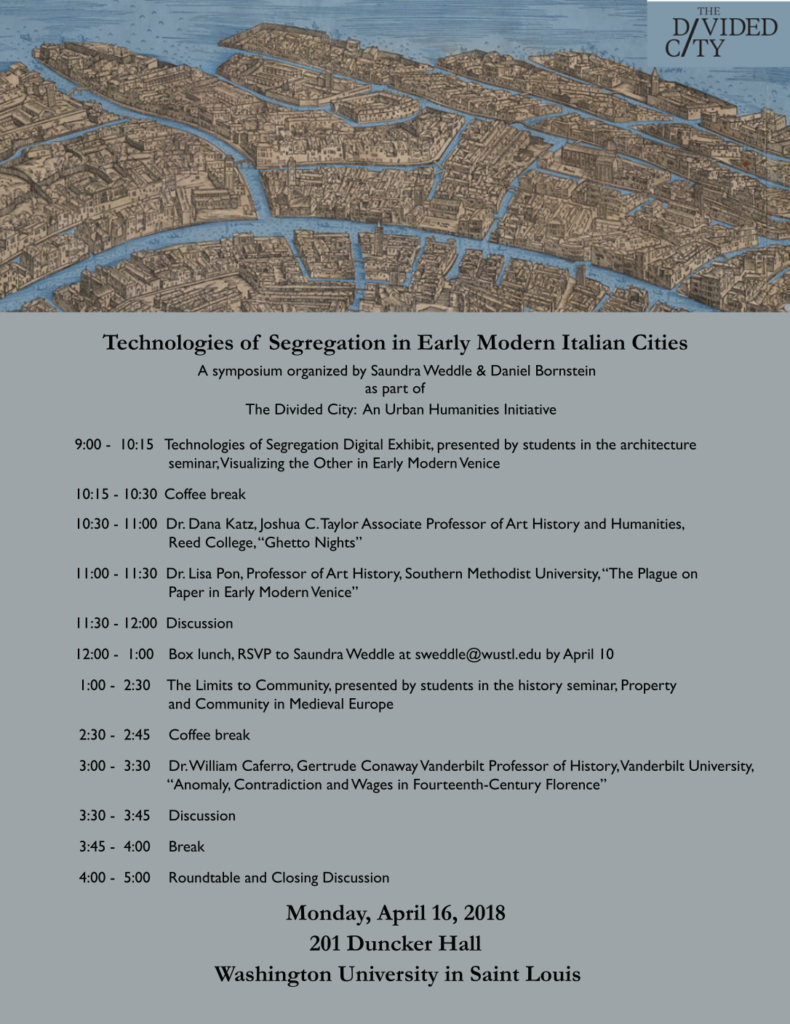
This Symposium formed part of the faculty collaborative project Technologies of Segregation in Italian Renaissance Cities.
April 16, 2018
“Music and Racial Segregation in 20th Century St. Louis: Uncovering the Source” with Patrick Burke
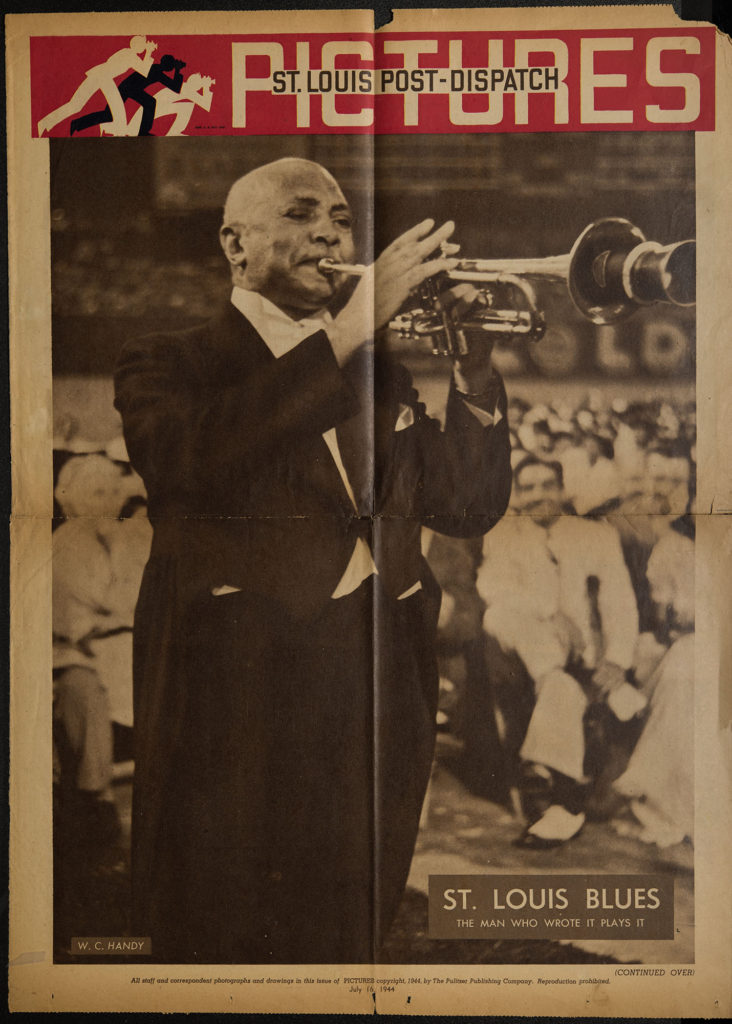
The Missouri History Museum premiered the online research exhibit titled Music and Racial Segregation in Twentieth-Century St. Louis: Uncovering the Source, a product of the faculty collaborative project The Sound of Segregation. Patrick Burke, associate professor of music and head of musicology at Washington University, hosted this unveiling.
April 10, 2018
City Seminar: “The Conundrum of Gentrification: Five Questions for Historians” with Suleiman Osman

April 5, 2018
“Mobility for All by All: Collisions: Transit and Hip-Hop”

For this temporary art installation, the civic engagement group Dutchtown South Community Corporation had hip-hop and visual artists along with videographers to develop conversations around the question “Where does transit take you?” This event took place at a proposed future MetroLink Station on the intersection of Chippewa and Broadway and was part of the faculty collaborative project titled Infrastructural Opportunism: Mobility For All By All.
More information about this art installation and the larger project is available here.
March 30, 2018
City Seminar Lecture Series: Architecture, Urbanism, and the Humanities

The City Seminar, in collaboration with the Divided City Initiative, presented seven cutting-edge lectures in the Urban Humanities.
February 9-28, 2018
City Seminar: “The Metallurgical Metropolis: Rethinking the Materiality and Historicity of Metal in the Caribbean Securityscape” with Kimberley McKinson
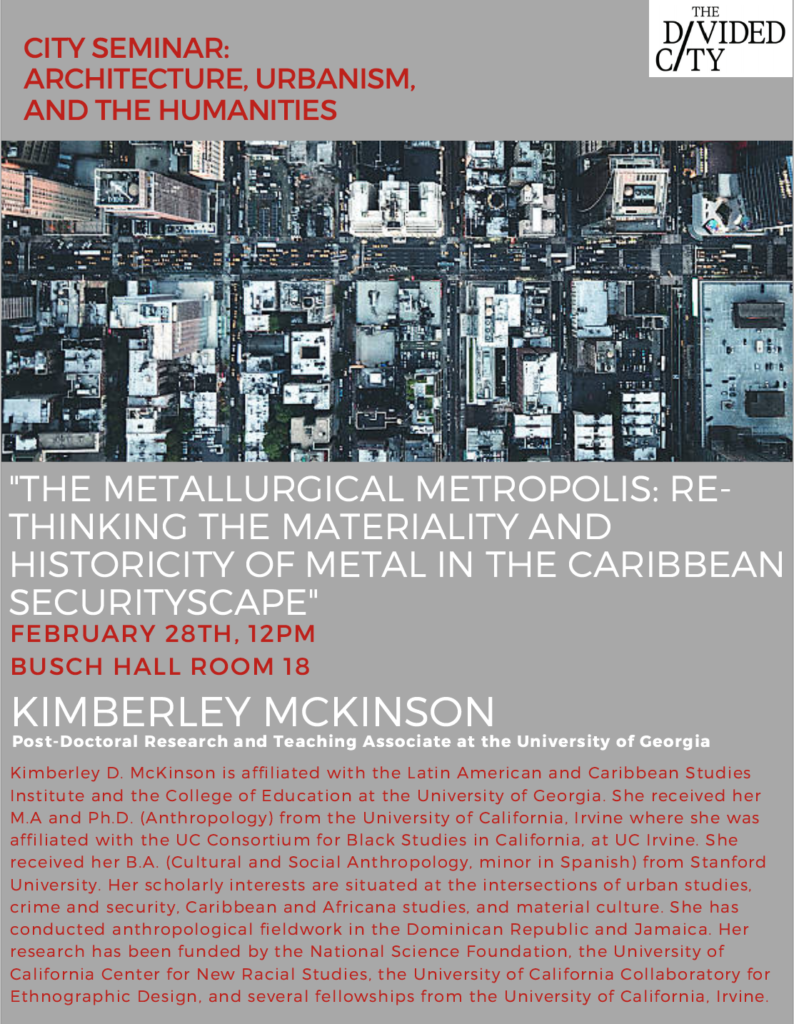
February 28, 2018
City Seminar: “Revanchist Kigali: Minor Architecture in a ‘World-Class’ City” with Samuel Shearer
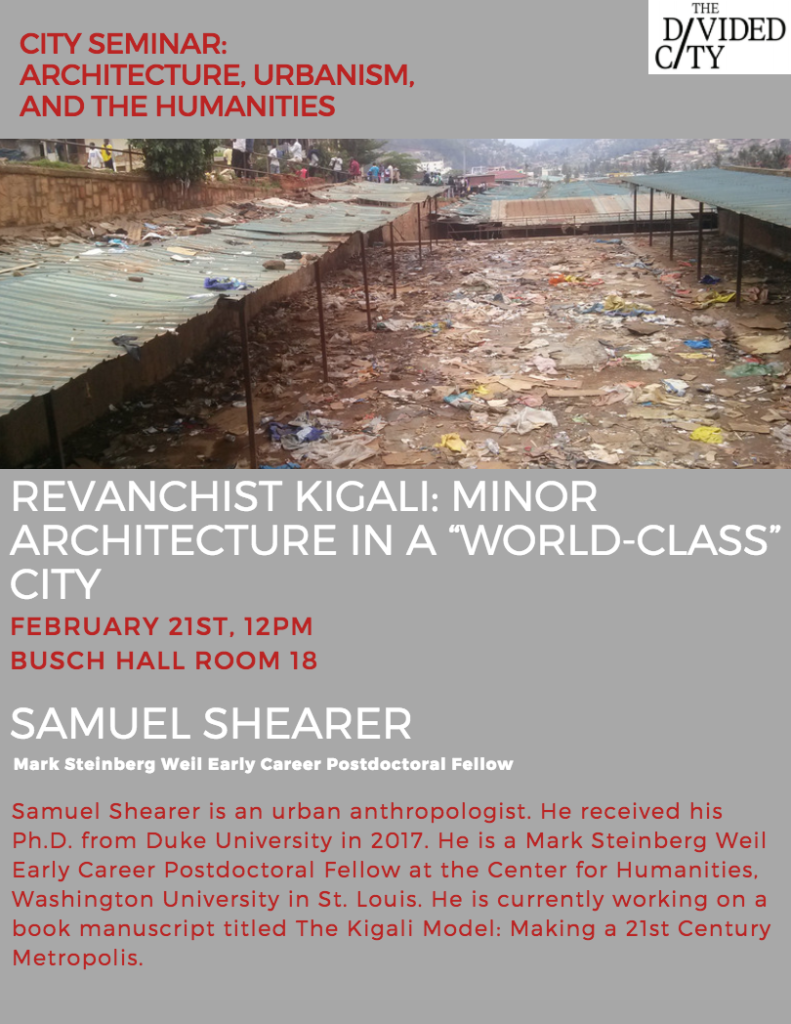
February 21, 2018
City Seminar: “Building Suburban Power: The Design of America’s Segregated Housing Market” with Paige Glotzer
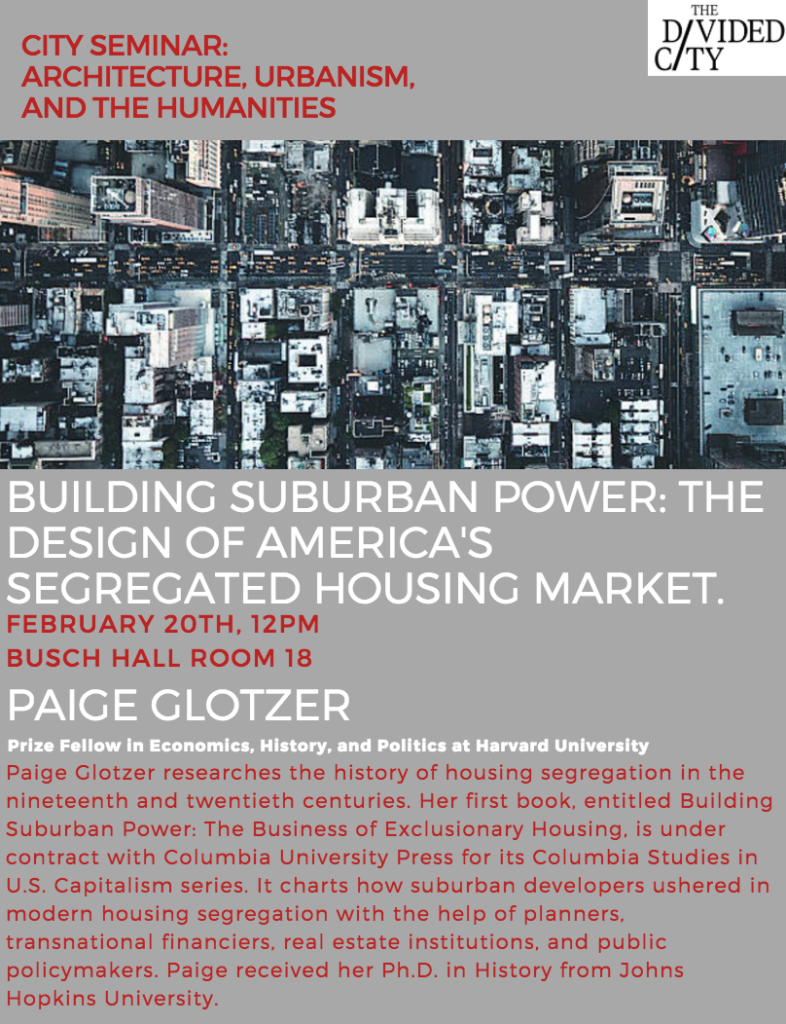
February 20, 2018
City Seminar: “‘This Might As Well Be Prison’: Homeless Shelters, Black Sex Offenders, and Hyper-Surveillance” with Terrance Wooten
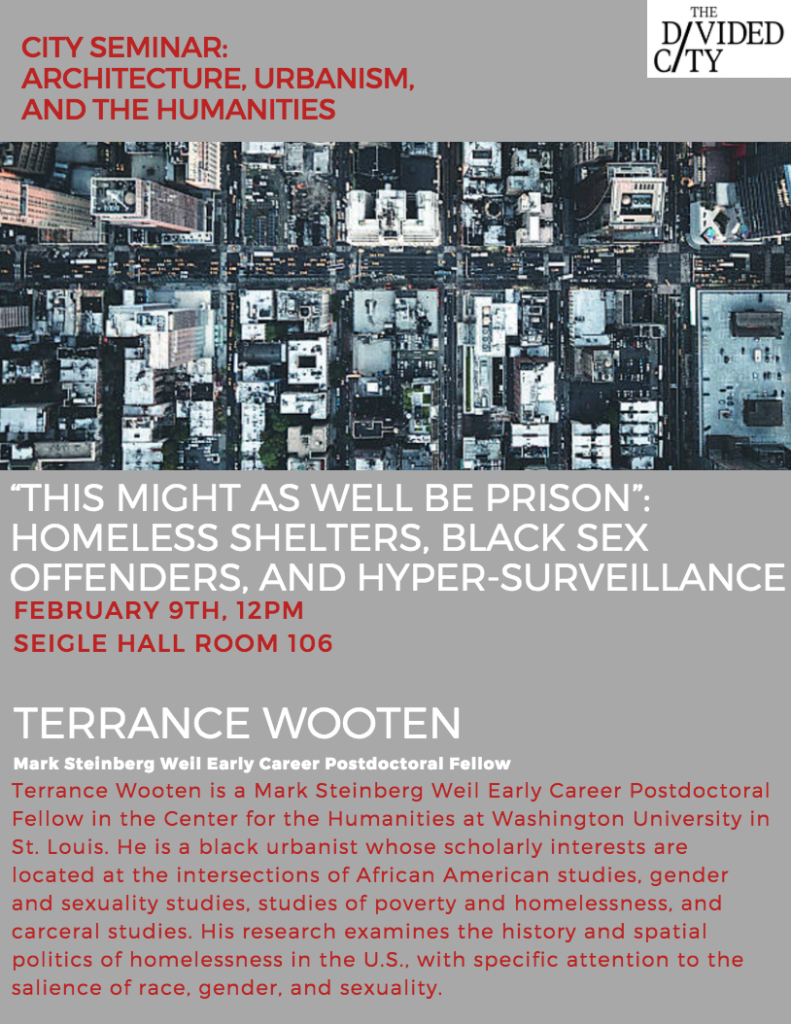
February 9, 2018
City Seminar: “‘There’s No Place to Rest’: Transience, Debility, and the Management of Homelessness” with Terrance Wooten
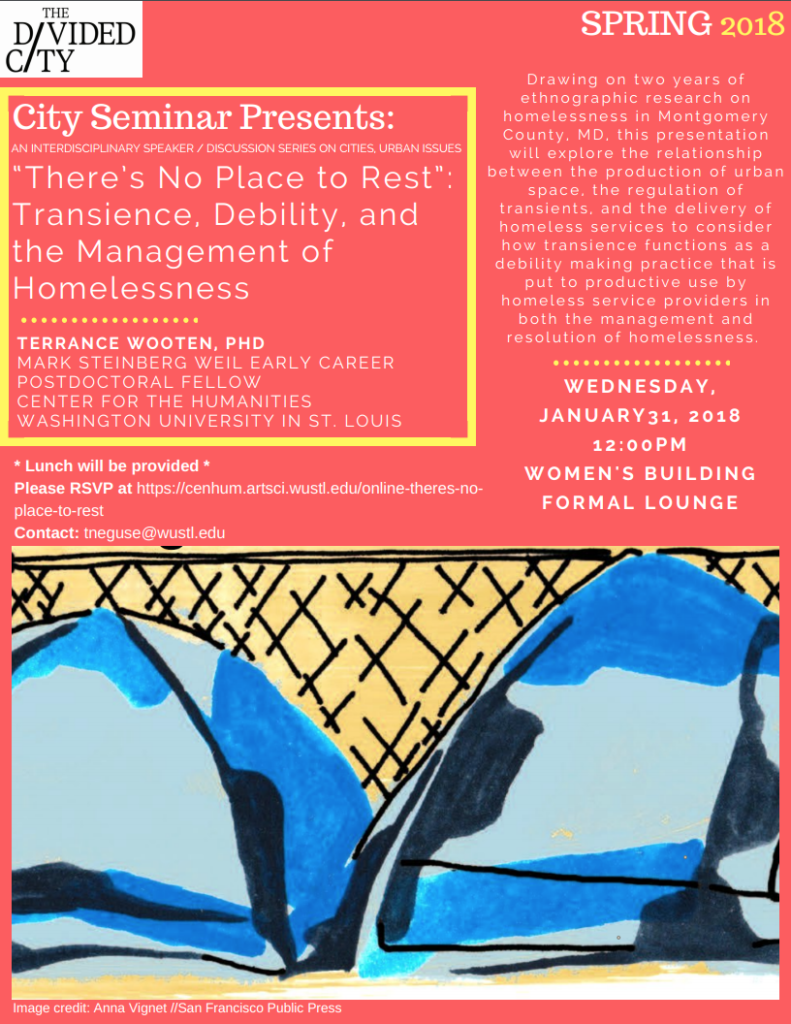
January 31, 2018
Segregation by Design: Lecture & Exhibit Tour
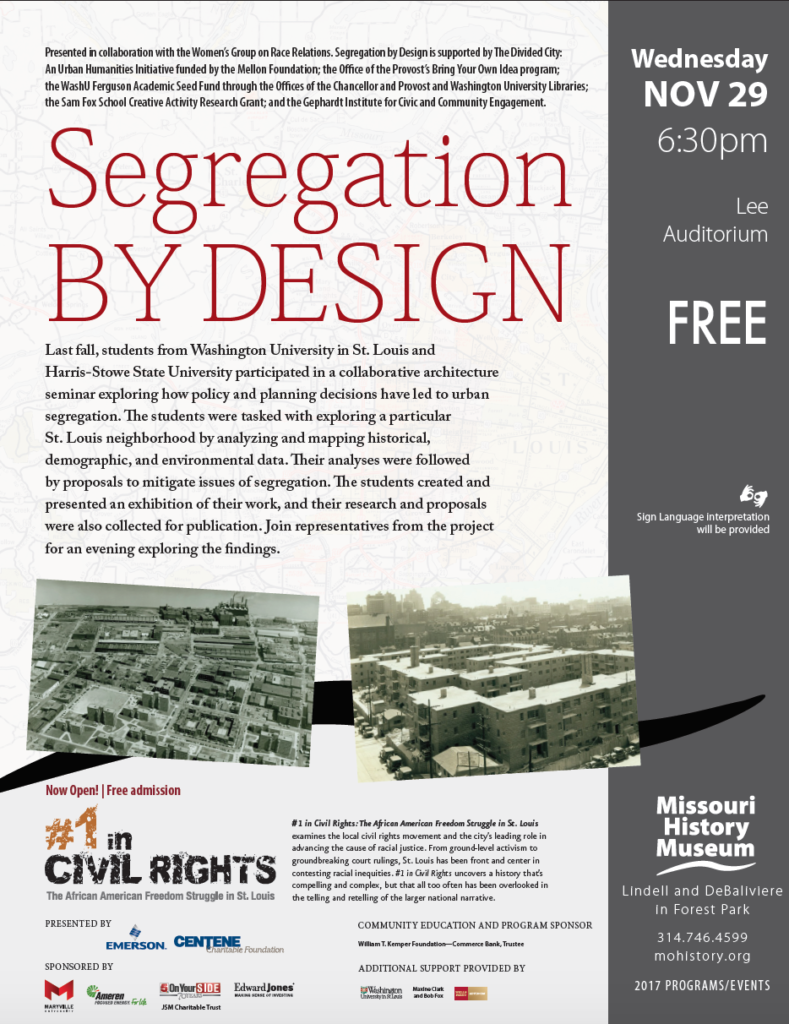
Students from the Segregation by Design course presented their work on causes and consequences of segregation, including a course book and a traveling exhibition. Their presentation was accompanied by a lecture about their findings.
November 29, 2017
“An Impossible Dream? Racial Integration in the United States”
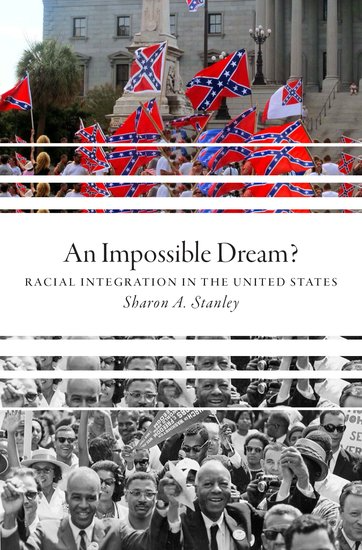
Is racial integration still a viable dream for black Americans in 2017? Stanley argues that we need to rethink what racial integration actually means before we can answer this question. Mere spatial mixing is not sufficient to dismantle the legacy of Jim Crow segregation. Any worthwhile model of integration must also entail a radical transformation of whiteness and its attendant privileges. Until clear indications exist that such a transformation could plausibly be achieved, black integration pessimism is a reasonable and defensible response to our political present.
Based off Stanley’s book of the same name, this public lecture was presented in conjunction with the course Segregation by Design.
November 16, 2017
“The Blood Is at the Doorstep”: Film Screening and Discussion
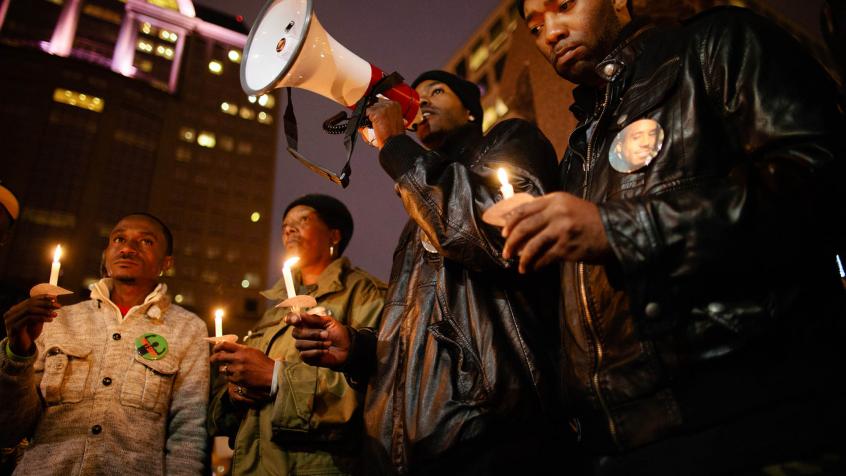
Film Screening and Discussion as a part of the St. Louis International Film Festival, Moderated by Divided City Project Director, Tila Neguse.
More information on this film is available here.
November 12, 2017
“Visualizing Renaissance Histories: A Symposium on Digital Narratives and 16th Century Florence and Venice”
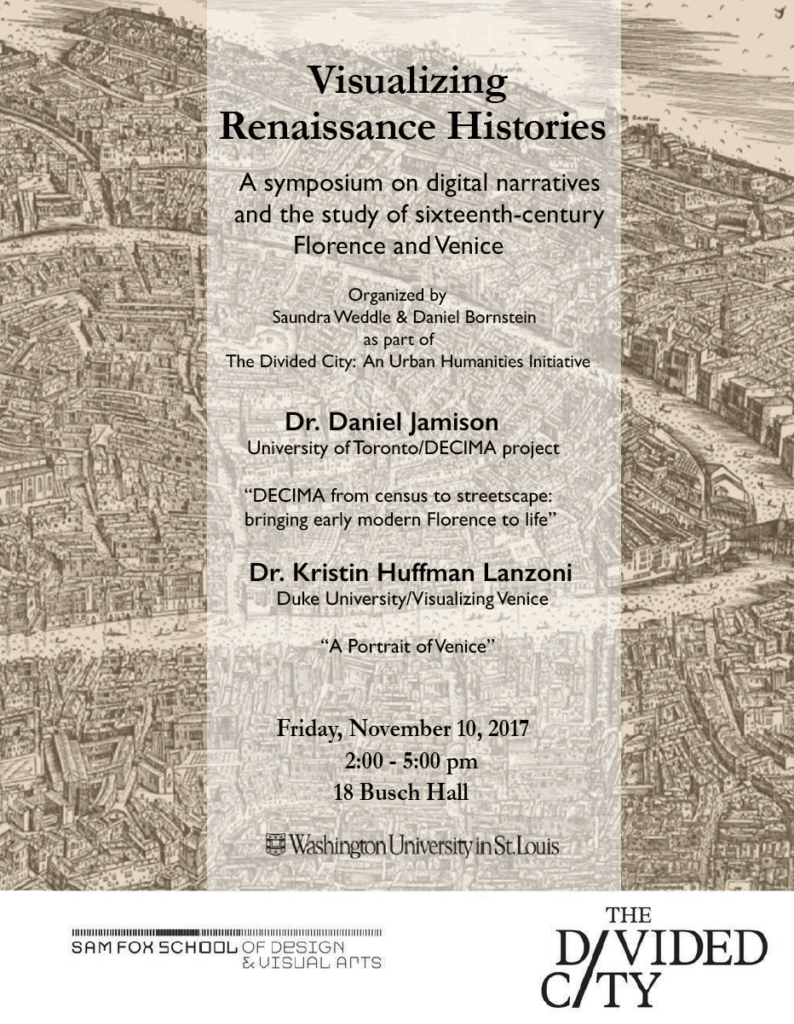
This Symposium formed part of the faculty collaborative project Technologies of Segregation in Italian Renaissance Cities.
November 10, 2017
Charting the American Bottom
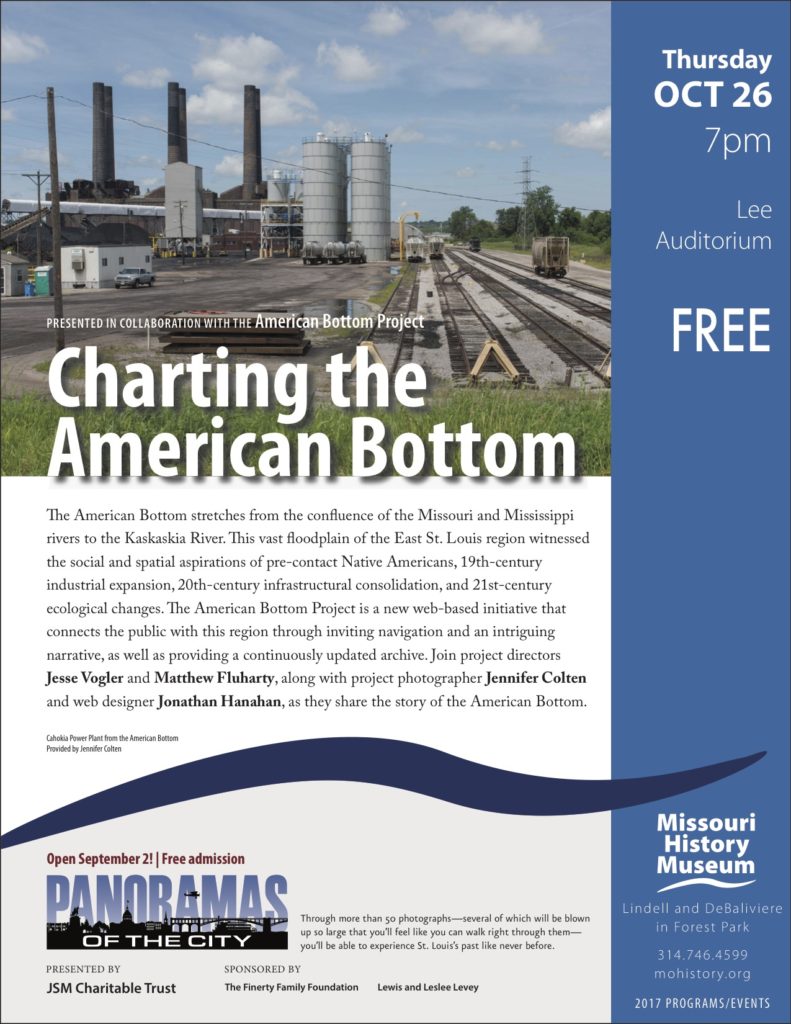
This presentation formed part of the faculty collaborative project Charting the American Bottom.
October 26, 2017
“Noon in the City: A Contemporary Tale of DuBois’s 7th Ward in Philadelphia”
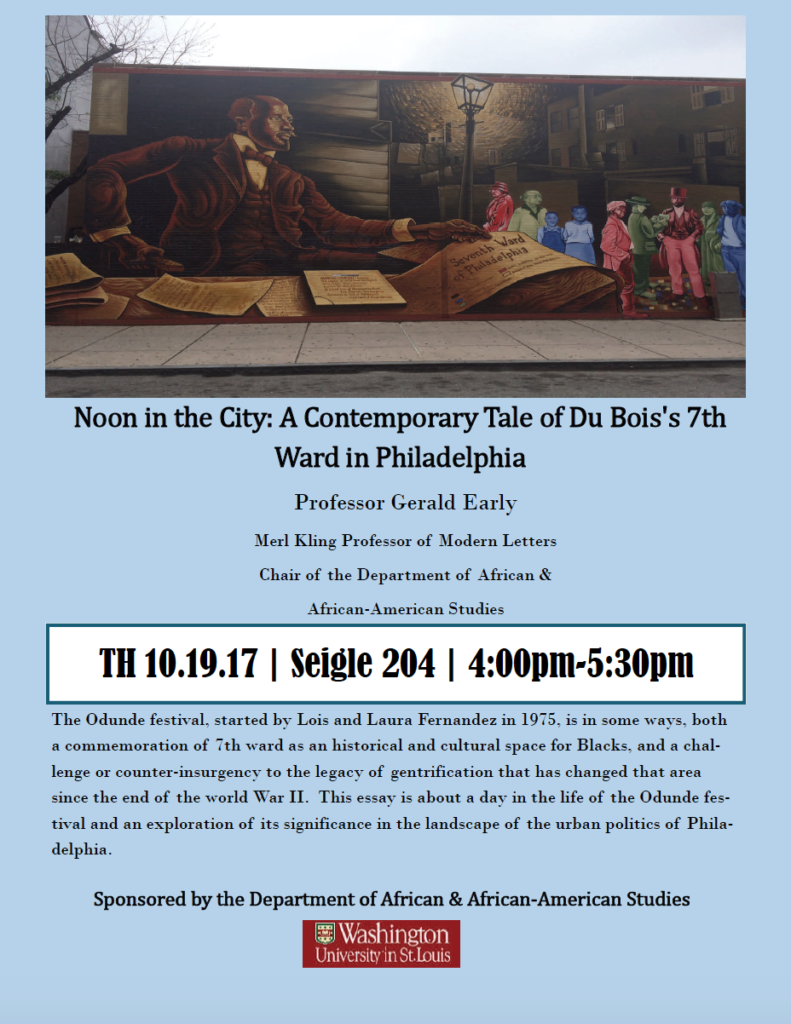
This event was presented as part of the faculty collaborative project Noon in the City.
October 19, 2017
Mapping LGBTQ St. Louis
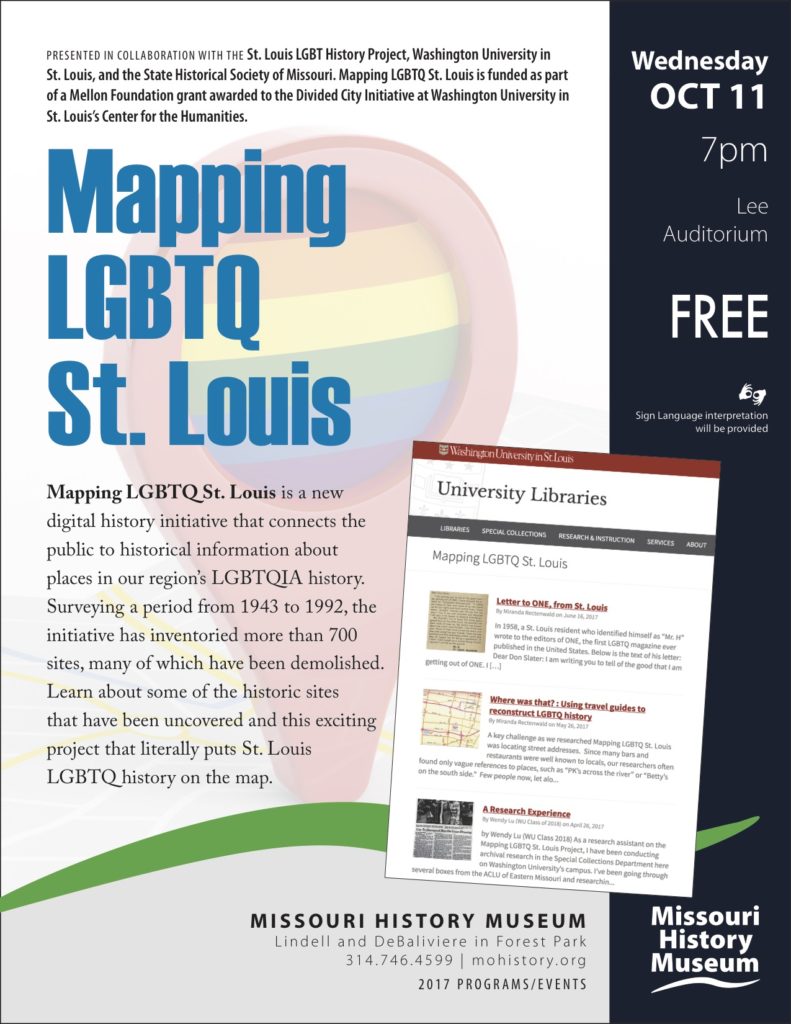
This event marked the launch of faculty collaborative project Mapping LGBTQ St. Louis‘ findings, specifically their interactive website, which documents local LGBTQ+ sites from 1945 to 1992.
October 11, 2017
“Eminent Domain / Displaced”
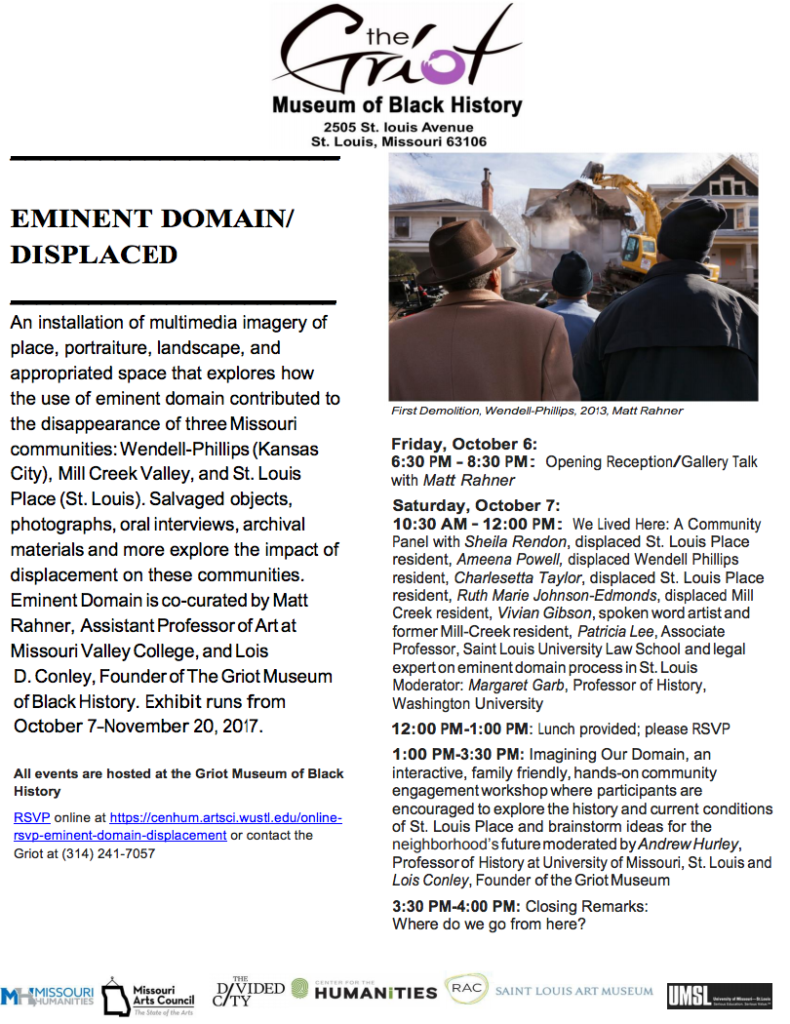
“Eminent Domain / Displaced” was a collaborative exhibit presented at the Griot Museum of Black History and explored the subject of forced displacement of Black families in St. Louis and more broadly. Its title alludes to repeated patterns whereby governments bought or forced residents out of their homes in areas like Mill Creek and Meacham Park to make room for more profitable residencies or business districts.
More information about the exhibit, including an interview with Griot Founder Lois Conley, is available here.
October 6-7, 2017
City Seminar: “Sense & the City” with Neil Goldberg
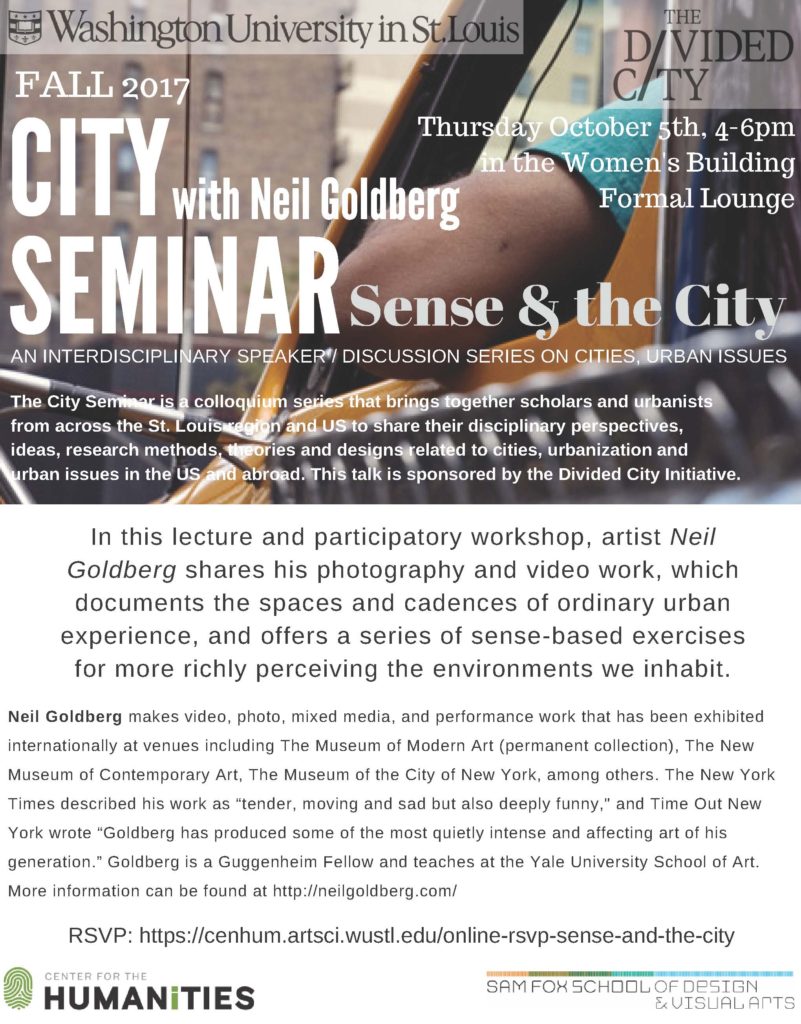
October 5, 2017
City Seminar: Divided City Graduate Student Summer Research Fellows
A recording of this event is available on our Video Archive and on YouTube.
September 25, 2017
City Seminar: “Beyond the Binary” with Liz Ogbu
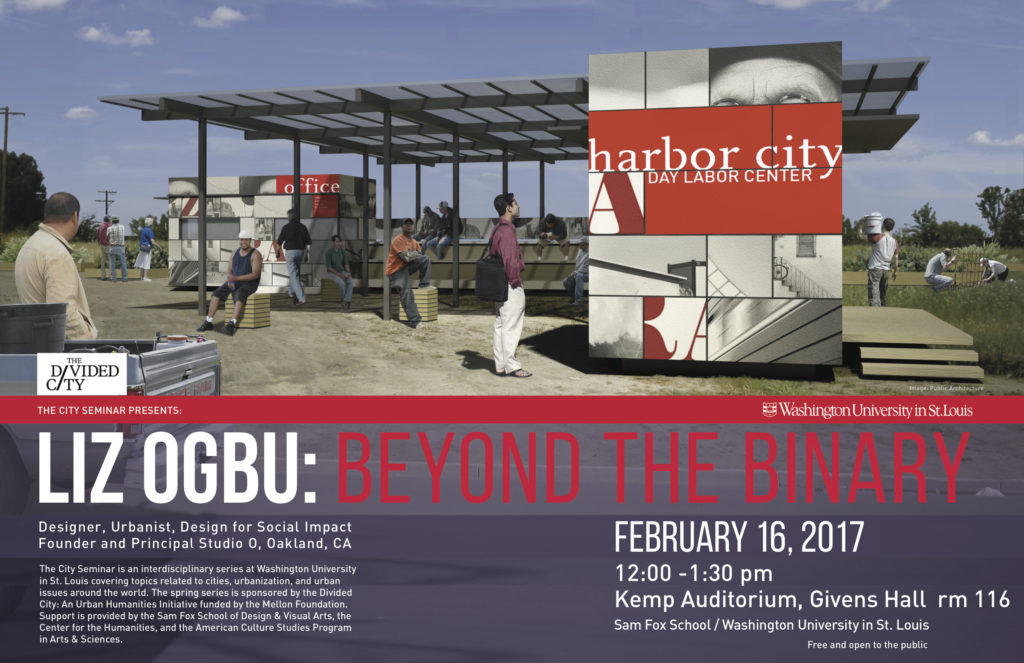
February 16, 2017
“A Round Table Discussion: Politics and the City”
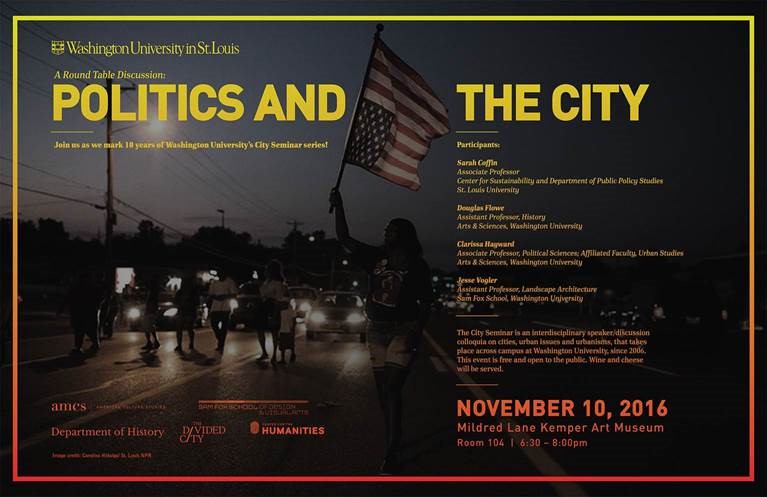
The year 2016 marked the 10-year anniversary of Washington University’s City Seminar, a forum that brings together scholars from the St. Louis region across disciplines to share research methods, theories, and emerging projects on cities, urbanization and urban issues.
To commemorate the series — in an important election year — the fall 2016 program comprised a roundtable discussion that took stock of the contemporary city as a space where citizenship matters and rights can be constructed (Harvey). Some might argue, despite a polarizing presidential campaign at the federal level, party divisions remain blurred in cities. In many places, ideological debates over citizenship and what rights or responsibilities citizenship confers, or who is excluded from those rights, are brisk and hard-fought. In other places, privatization of services and urban spaces, as well as expanding or contracting housing and labor markets, have obscured or sidelined political debates. The City Seminar spurred a new conversation about the relationship between cities—or the imagined urban—and politics.
The City Seminar roundtable convened a cross-disciplinary panel to discuss the status of the city in the new millennium: Citizenship, policy, markets, and the roles, scales and potentials of the public sector, urban spaces and built environments.
A video of this event is available on our Video Archive and on YouTube.
November 10, 2016
“How to Tell the Story (Focus on Method and Interpretation”

This Panel formed part of the Memorializing Displacement Local/Global Workshop on forced migration, urban removals, dispossession, and other forms of displacement. It featured the following invited guests: Paul Fehler, Producer, The Pruitt Igoe Myth; Todd Palmer, National Public Housing Museum; John Wright, Historian; Chrischene Julius, District Six Museum, CapeTown; and Leslie Witz, University of the Western Cape.
A video of this event is available on our Video Archive and on YouTube.
October 27, 2016
City Seminar: “Creating the Lung Block: Racial Transition and the Making of the ‘New Public Health’ in a St. Louis Neighborhood” with Taylor Desloge
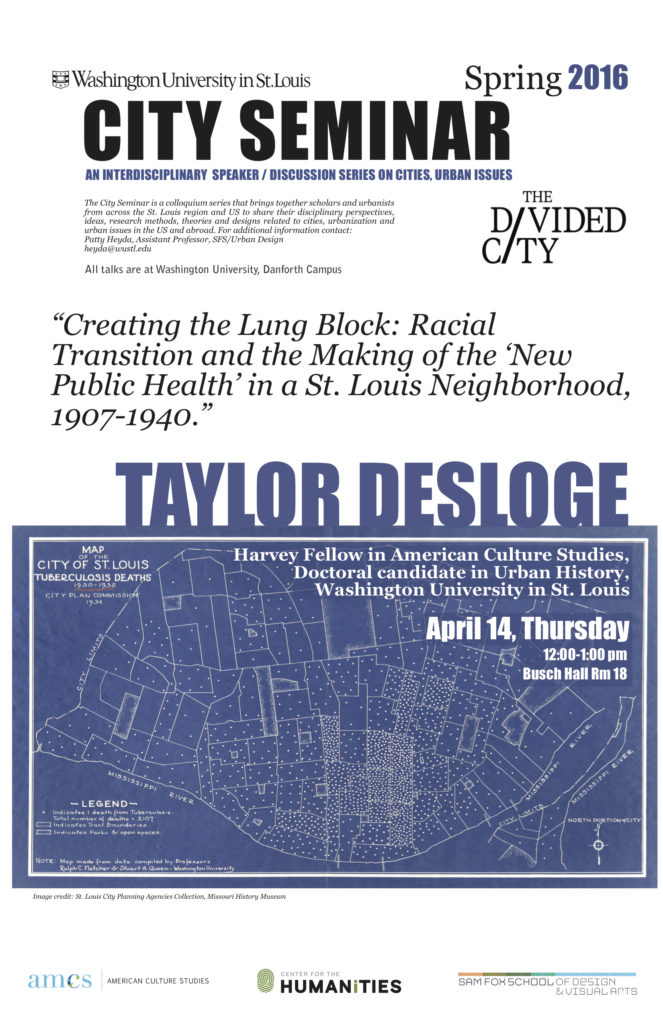
Desloge’s article, based partly on this lecture, is available in vol. 111, no. 2 of the Missouri Historical Review. A video of this event is available on our Video Archive and on YouTube.
April 14, 2016
City Seminar: “Urbanization: Towards a new conceptual cartography” with Neil Brenner
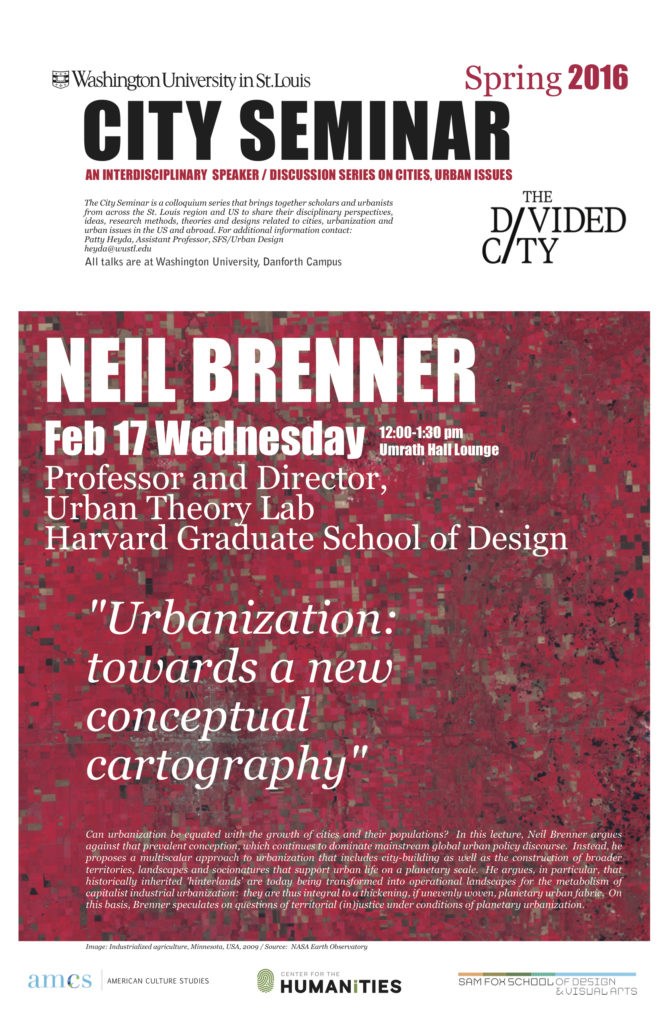
Can urbanization be equated with the growth of cities and their populations? In this lecture, Neil Brenner argued against that prevalent conception, which continued to dominate mainstream global urban policy discourse. Instead, he proposed a multiscalar approach to urbanization that includes city-building as well as the construction of broader territories, landscapes and socionatures that support urban life on a planetary scale. He argued, in particular, that historically inherited ‘hinterlands’ are today being transformed into operational landscapes for the metabolism of capitalist industrial urbanization: they are thus integral to a thickening, if unevenly woven, planetary urban fabric. On this basis, Brenner speculated on questions of territorial (in)justice under conditions of planetary urbanization.
February 17, 2016
“More Menacing Than Fire and the Elements: Race, Neighborhood, and Planning in 20th Century St. Louis” with Joseph Heathcott
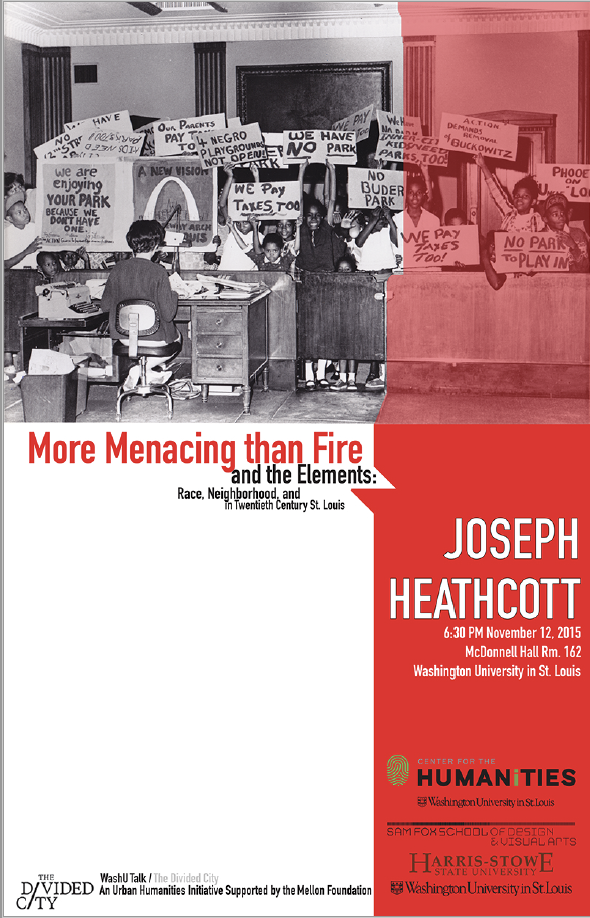
This lecture formed part of the faculty collaborative project, Segregation by Design. A video of this lecture is available on our Video Archive and on YouTube.
November 12, 2015
City Seminar: “The Metamorphic City: Eco-urbanism and quality of life in post-industrial cities” with Catalina Frexias
October 22, 2015
City Seminar: “At Risk of Seeming Ridiculous: Recasting ‘Black Lives Matter’ in the Contemporary Popular Imagination” with Garret Duncan
This lecture formed part of the faculty collaborative project, Tale of Two Cities: Documenting Our Divides. A recording of this event is available on our Video Archive and on YouTube.
October 8, 2015