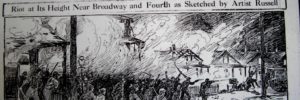
Jesse Vogler and Karla Scott 100 years ago this year, in the city of East St. Louis, IL, the United States experienced the single most violent racially motivated massacre in… Read more »




Jesse Vogler and Karla Scott 100 years ago this year, in the city of East St. Louis, IL, the United States experienced the single most violent racially motivated massacre in… Read more »
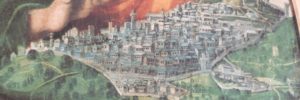
Saundra Weddle and Daniel Bornstein This project focuses on the cities of Cortona and Venice, whose differences of geography, history, and scale offer revealing test cases for how the natural… Read more »
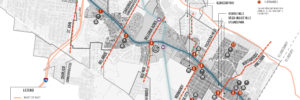
Caitlyn Collins, Patty Heyda, David Cunningham “Inequality and the City: Mapping the Ecology of Urban Segregation” is a research-based capstone course for undergraduate students in Sociology, Architecture and Urban Design…. Read more »

The lead investigators plan to examine the role of government influence on the formation and division of public spaces with in St. Louis, focusing on the North side of the city. The project will collect information on government intervention in a historical context through archival research and a seminar held at Washington University in St. Louis followed by publication of analysis of contemporary and historical perspectives. The plan is to collect information and examine the evolving plans of local and national government in North-Side St. Louis, including citizen activities in the area. The collaboration includes Eve Blau, with longstanding expertise in relating political ideologies to architectural and urban histories, Heather Woofter, an architect with design research examining large-scale government projects to better understand the urban and social implications of spatial form, and Michael Allen, from the Preservation Research Office engaging politics of place and North-Side planning discussions.
The project will engage the humanities and architectural research, publishing a written essay with diagrammatic analysis and historical narratives as reference materials. The project will contextualize government intervention in St. Louis with reflection on the shifting historical nuances of politics of place at national, local and international scales.
The lead investigators plan to examine the role of government influence on the formation and division of public spaces with in St. Louis, focusing on the North side of the city. The project will collect information on government intervention in a historical context through archival research and a seminar held at Washington University in St. Louis followed by publication of analysis of contemporary and historical perspectives. The plan is to collect information and examine the evolving plans of local and national government in North-Side St. Louis, including citizen activities in the area. The collaboration includes Eve Blau, with longstanding expertise in relating political ideologies to architectural and urban histories, Heather Woofter, an architect with design research examining large-scale government projects to better understand the urban and social implications of spatial form, and Michael Allen, from the Preservation Research Office engaging politics of place and North-Side planning discussions.
The project will engage the humanities and architectural research, publishing a written essay with diagrammatic analysis and historical narratives as reference materials. The project will contextualize government intervention in St. Louis with reflection on the shifting historical nuances of politics of place at national, local and international scales.
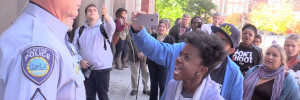
The events of August 9, 2014, in Ferguson, Mo., are now at the epicenter of the political, social, geographic and economic history of the St. Louis area. In response, the course “Tale of Two Cities: Documenting Our Divides” uses art as activism. It brings together students from across campus to engage with local community organizations. Together, we create documentary videos that use street events, meetings and interviews to capture the immediacy of our current historical moment.
Guest lectures from Washington University faculty members, local professionals and community leaders and a partnership with the Higher Education Channel (HEC-TV) will guide students through the history of St Louis, ethics and best practices for community engagement, as well as the basics of storytelling and video production.
Video has the potential to create shifts in possibilities, not only with an observer/audience relationship, but also in an individual videographer’s understanding of his or her world. Dissemination through social media can build an activated audience. “Tale of Two Cities” allows students to use video as a problem-solving tool, to engage in self-directed research that moves them beyond the facts to an active production of understanding and meaning. Alignment, distortion, bias, privilege and dismissiveness are often the foundation of explicit and implicit unconscious language. Creating discourse with the medium of the moving image and sound may change the questions, shift cultural ideas and provide platforms for inventive solutions.
The “Tale of Two Cities” course is designed so that history, theory and academic analysis will be balanced with community engagement and virtual dissemination. Successful completion of this course involves researching and creating short videos with a distinct perspective. Topics can include personal and/or institutional issues of a “divided city” that are exacerbated by race, gender, economic status, sexual orientation, age and/or geography. The focus of art as activism in “Tale of Two Cities” is to raise social awareness and to advocate for change.
“Tale of Two Cities: Documenting Our Divides” is a course taught in the fall of 2015 by Associate Professor Denise Ward-Brown of the Sam Fox School of Design & Visual Arts.
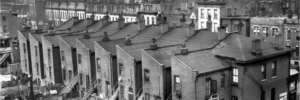
Visualizing Urban History brings a multi-disciplinary approach to tracing the history of a place and its built environment. The museum exhibit produced through the project will showcase the powerful use of humanities methods in urban scholarship, calling attention to both the evidence used by historians and the analytic stance of humanists. Most importantly, the exhibit and accompanying catalogue will offer St. Louis residents a history of their neighborhoods, and a way to think through the dramatic changes in the city’s demographics and built environment.
The museum exhibit will trace the history of racial and economic segregation in St. Louis from the mid-nineteenth century through the mid twentieth century and, at the same time, make a case for new inter-disciplinary strategies for studying urban history. The two primary areas of focus are St. Louis neighborhoods. The Mill Creek Valley, in the core of the city, east of Grand Boulevard to 20th Street, between Olive and Scott Streets; and Jeff-Vander-Lou, so named in 1966 as the area on the city’s North Side between Jefferson, Vandeventer, Delmar, and St. Louis Avenues. We will track major transitions in the built environment of these two areas from the late nineteenth century through the twentieth century.
The project explores how to think visually about urban history, tracking the impact of social change on the built environment and examining the ways changes in urban forms represent and drive social and political change.
Music is one of the primary means by which racial and ethnic categories are maintained and understood. As Ronald Radano and Philip Bohlman put it in their foundational 2000 book Music and the Racial Imagination, music both “contributes substantially to the vocabularies used to construct race” and “fills in the spaces between racial distinctiveness”—in other words, music sometimes enables and reinforces racial barriers and sometimes challenges and undermines them. This fundamental connection between music and race is especially notable in urban areas, where music often informs neighborhood identities and where musical institutions, both formal and informal, reflect and shape racial inclusion and exclusion.
St. Louis, notorious for its history of racial segregation but also widely celebrated for its vibrant musical heritage, provides a significant test case for questions about the connections between music and segregation in urban life. An approach to the city’s musical history focused on venues and institutions reveals the deep interrelationship of music with racial policies and ideologies.
The archives of both Washington University (WUSTL) and the Missouri History Museum (MHM) hold many materials related to this rich history. At present, however, their catalogs vary in the degree to which they signal content related to music, and no formal means of coordination allows students and researchers to view or search these resources as a unit. Such coordination is necessary if researchers are to thoroughly address the role of music in the divided city that is St. Louis.
This project will 1. develop an inventory of archival materials related to music and racial segregation in St. Louis in the collections of WUSTL and MHM and 2. create a publicly accessible website that highlights these resources and enables searches within them.
Patrick Burke is working with two undergraduate interns (Logan Busch and Courtney Kolberg) during Fall 2016 to identify and inventory relevant archival material. The search focuses currently on Burke’s area of specialization, popular music and jazz between 1920 and 1970, with emphasis on sources that shed light on the connections between musical institutions and racial segregation. Librarians and archivists who are lending their expertise in guiding the research include, Emily Jaycox, Molly Kodner, Brad Short and Vernon Mitchell.
In the second phase of the project, an interactive website will be created under the supervision of Burke and Douglas Knox. The website will both enable searches within relevant collections and feature particular collections in online exhibits. We hope to increase public interest in both the history of music in St. Louis and the rich collections of WUSTL and MHM.
The revealing mirrors of film and television reflect — both consciously and unconsciously — problems within U.S. society, including the overt and covert racism that has long segregated our cities. “Mean Streets: Viewing the Divided City Through the Lens of Film and Television” — presented as part of the St. Louis International Film Festival (SLIFF) November 3-13, includes screenings of narrative and documentary works that address the strong intersections between racial divisions and urban spaces. These 15 programs comprising 21 films will be accompanied by discussions with filmmakers, film subjects, Washington University and outside scholars, and national cultural critics, followed by Q&As with the audience. In addition, “Mean Streets” will include four workshops with filmmakers that will address aspects of the filmmaking process. All programs will be free and open to the general public. “Mean Streets” is a collaboration among Cinema St. Louis, Washington University Libraries, the Missouri History Museum, and Washington University’s Sam Fox School’s College of Architecture, with the participation of faculty from many Washington University programs and departments, including American Culture Studies, African and African-American Studies, Performing Arts, Political Science, History, and German and Jewish Studies.
"Mean Streets" programming includes local, national, and international components. Locally relevant films include the More Than One Thing and The Pruitt-Igoe Myth double bill (both dealing with St. Louis’ notorious Pruitt-Igoe housing development), director Jun Bai’s double feature of Bob’s Tour and Exodus (both dealing with the current state of North St. Louis), Gentlemen of Vision (about North County’s competitive “stepping” team), and a program of Ferguson shorts. National programming includes films dealing with racial divides in large cities, such as Camden, New Jersey (Camden: Love/Hate), problems of violence and racism in Chicago (Chi-Raq, the Kartemquin shorts program), mass incarceration in one majority African American zip code in Milwaukee (Milwaukee 53206), the struggle of adults to earn their high school degrees in a low income area of Indianapolis (Night School), and the struggle of an African American laborer to keep himself and his family alive in the Los Angeles enclave of Watts (Killer of Sheep). Our national coverage also examines racial fissures in smaller communities, such as a Georgia county rocked by the murder of a young African American man by an elderly white man (Southern Rites), the rupture of a small North Carolina town after high school basketball star Allen Iverson was jailed for alleged involvement in a physical altercation with local white residents (No Crossover), and the intersection of civil rights and blues music in small segregated Southern communities during 1964’s Freedom Summer (Two Trains Runnin’). Finally, “Mean Streets” includes two films from an international perspective, The Peacemaker and Bogdan’s Journey, which focus on religious and ethnic divides and the difficult search for common ground.
The “Mean Streets” programs include such significant filmmaking names as Charles Burnett, director of Killer of Sheep and one of the influential figures in the “L.A. Rebellion” of independent African American filmmakers; Oscar-nominated filmmaker Steve James, known for No Crossover (screening as part of “Mean Streets”), Hoop Dreams, and The Interrupters; Gillian Laub, respected international photographer and director of Southern Rites; and Gordon Quinn, founder of the influential social justice media collaborative Kartemquin Films. In addition, these screenings will include important national-level commentators, such as cultural critic Greg Tate and independent media advocate Angelica Das from American University.
With additional support from Washington University’s American Culture Studies program, “Mean Streets” also includes four filmmaking workshops to allow budding and experienced filmmakers to engage with professional media makers around issues of filmmaking process. Filmmakers Diane Carson and Robert Johnson, Jr. (Other People’s Footage) will help attendees understand the laws around copyright and fair use. Brian Woodman, Curator of the Washington University Film & Media Archive and producer for The Pruitt-Igoe Myth, will discuss techniques and problems with using archival materials in documentary films. Filmmaker Robert Greene (Kate Plays Christine) will explore the complexities of storytelling via film editing. Finally, Kevin Wilmott (co-writer of Chi-Raq and director of independent films such as C.S.A.: Confederate States of America and Destination Planet Negro) will lead a workshop on screenwriting for independent filmmakers.
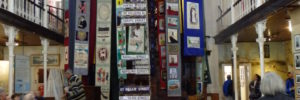
One of the unacknowledged sources contributing to the 2014 protests in Ferguson and the greater St. Louis area was a chain of forced migration. Many of the aggrieved African American residents of Canfield Green, the site of Michael Brown’s shooting, had been evicted from the neighboring town of Kinloch, Missouri, where airport expansion removed nearly 4,000 people from their homes. The Kinloch expulsion was only the most recent episode in a series of urban removals, which include the 1970s demolition of the Pruitt Igoe public housing project and the 1950s Mill Creek Valley clearance. By shattering communities, each dispossession rendered displaced residents vulnerable to the type of systematic injustices laid bare in Ferguson.
Although many St. Louisans have a passing familiarity with the terms “Kinloch,” “Mill Creek Valley,” and “Pruitt-Igoe,” these places and the communities that inhabited them deserve a more prominent and enduring imprint on our collective memory. Drawing on innovative practices in South Africa, Chicago, New York, and Philadelphia, the Memorializing Displacement Workshop will instigate a discussion among activists, scholars, curators, and other museum professionals about how to recover and preserve stories of displaced communities and involuntary urban relocations in St. Louis. The opening plenary session, to be held at the Missouri History Museum at 7 p.m. on October 26, will highlight museum practices in South Africa. Programming on October 27 and October 28 will take place at Washington University and the University of Missouri-St. Louis and will consist of a “lost communities” tour of the St. Louis metropolitan area, film screenings, and a series of a series of workshops featuring local, national, and international curators, activists and scholars that explore the following questions:
1) What interpretive strategies have been employed successfully in St. Louis or in other parts of the United States and the world to recover the stories of displaced populations?
2) What obstacles have local groups encountered in keeping alive memories of dislodged communities in St. Louis?
3) How relevant are the interpretive strategies adopted elsewhere to the case of St. Louis?
4) How can the interpretation of lost communities address the contemporary legacies of historical injustices and unleash the forces of progressive change?
The Memorializing Displacement Workshop is sponsored by the Center for Humanities at Washington University, the Museum Studies Program at the University of Missouri-St. Louis, and the Missouri History Museum.