



City Seminar
The City Seminar was founded in 2007 as a forum through which scholars across disciplines and from colleges and universities throughout the St. Louis area share ideas, research methods, theories, and topics on urban issues in the United States and abroad. The City Seminar has been especially effective in bringing Architecture, Urban Design, and Humanities scholars into regular dialogue. Since 2014, the Divided City has co-sponsored several of the following City Seminar lectures:

“‘Saint Pollution’: Aspects of Environmental Literary History in 1870s-1920s St. Louis” with Jason Finch
Tuesday, November 15th, 2022 | 12:00pm | Danforth University Center – Room 276
RSVP for this event here.
Environments and atmospheres of smoke, metal, brick and human/nonhuman encounter recur in the literature of St. Louis during its period of national and international prominence, approximately the 1870s to the 1920s. This body of writing is extensive both in genre and in terms of authors and readers’ diverse positionings. But academic work on St. Louis literary history remains sparse, and is largely concerned with the crisis period of the later twentieth century.
Rather than tracing writers of civic importance or the roots in this city of those who became world famous elsewhere, Jason’s current research seeks atmospheres particular to St. Louis in the period’s rich literary corpus. Environmental case studies selectively examined in his paper include the city’s notoriously smoky air and the impact of transport infrastructures (including in accidents and the role of tracks in dividing urban populations from one another spatially). The noxious industries of St. Louis, centrifugal demographic moves northwards, southwards and westwards, and the pervasive rail yards and streetcar lines of the late nineteenth- and early twentieth-century city echo through poetry, fiction and nonfictional prose by Sarah Teasdale, Kate Chopin, Marietta Holley and Theodore Dreiser. In their 1890s to 1920s texts, the tone is energetic, not elegiac or melancholic like that of later, memorializing, writings by exiles T.S. Eliot and Tennessee Williams, an energy retained in underexamined memoirs from the 1930s to 1950s by the dramatist Orrick Johns and the world champion boxer Henry Armstrong. Methodologically, the paper links literary urban studies with environmental history.
Meet the speaker:
Jason Finch is associate professor in the Department of English Language and Literature at Åbo Akademi University, and principal investigator (Finland) on the European-Research-Council-funded project “Public Transport as Public Space in European Cities: Narrating, Experiencing, Contesting” (PUTSPACE). He has written or co-edited 12 books and special issues, including Literary Urban Studies and How to Practice It (Routledge, 2022) and Deep Locational Criticism (John Benjamins, 2016). Current research focuses on literary London (especially representations of housing and public transport), and on secondary Global North cities and urban regions.
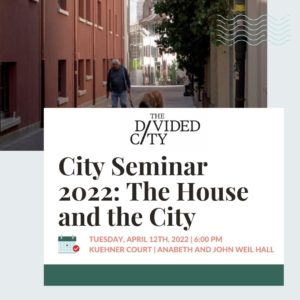
“The House and the City” with Daniel Blum
Tuesday, April 12th, 2022 | 6:00pm | Kuehner Court – Anabeth and Jonh Weil Hall
RSVP for this event here.
Europe is built. More than two-thirds of the European population lives in cities. This makes the city a “conditio sine qua non” for European architecture. We never face a tabula rasa condition, neither physically nor intellectually.
The resilience of the European city is deeply rooted in its ability to transform, to adapt, to recover. This constant evolutionary process over centuries is transcending built fabric to what we call identity – the individual character of each city – which is often praised but cannot be produced as a whole.
In this sense, each house can be regarded as a tone in the symphony (or cacophony) of a city. Every new house, every refurbishment, is a change in the city fabric that influences its overall tune.
In our recent work, we are reflecting this responsibility toward the city: Each house is an attempt to balance private interests with the demands of the city in a specific place. In this reflection on specific local constellations (always with the city as protagonist), we regard each house as an opportunity to add, adjust, or even heal the fabric of the city in its constant evolution driven by social, economic, and cultural forces.
Meet the speaker:
Daniel Blum is a practicing architect and educator, based in Switzerland. He has worked as an academic assistant at the ETH and has been teaching regularly at various universities since 2014, such as the Dessau International Architecture School among many others. He is currently teaching a design studio at the Münster School of Architecture. His work has been exhibited widely through venues such as the Venice Biennale and Swiss Architecture Museum. Daniel worked with David Chipperfield Architects in London and Diener & Diener Architects in Basel. In 2017, he became head of design at Itten + Brechbühl in Basel and was appointed member of the board in 2019.
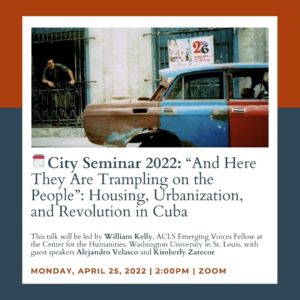
“‘And Here They Are Trampling on the People’: Housing, Urbanization, and Revolution in Cuba” with William Kelly, Alejandro Velasco and Kimberly Zarecor
Monday, April 25th, 2022 | 2:00pm | Zoom
How did the 1959 Cuban Revolution impact the urban housing crisis in Cuba? The notion that housing is a human right was a central pillar of revolutionary ideology. In service to this idea, the new government ostensibly banned evictions in 1959 and nationalized all urban rental property in 1960 with the intent to provide every Cuban with a decent home. But what was the lasting impact of these policies? As Cuban cities fell into neglect and disrepair in the decades that followed, the island’s most vulnerable citizens, including large numbers of Afrocubans, were forced to build illegal communities and face down government demolition brigades as they made claims to the city. Examining their struggles helps us understand how the revolutionary mission to create universal housing access functioned at the ground level.
Meet the Speakers:
William Kelly is the ACLS Emerging Voices Fellow 2021-2022 at the Center for the Humanities, Washington University in St Louis
Alejandro Velasco (Associate Dean for Faculty and Academic Affairs, Associate Professor of History, NYU Gallatin School of Individualized Study) is a historian of modern Latin America whose research and teaching interests are in the areas of social movements, urban culture and democratization. His book, Barrio Rising: Urban Popular Politics and the Making of Modern Venezuela (University of California Press, 2015), couples archivial and ethnographic research to examine how residents of Venezuela’s largest public housing community pursued full citizenship during the heyday of Latin America’s once-model democracy.
Kimberly Zarecor (Professor of Architecture in the College of Design at Iowa State University) has been teaching courses in architectural history and design since 2005. Her historical research examines the cultural and technological history of architecture and urbanism in the former Czechoslovakia. Her new research is about quality of life in small and shrinking rural communities in Iowa.
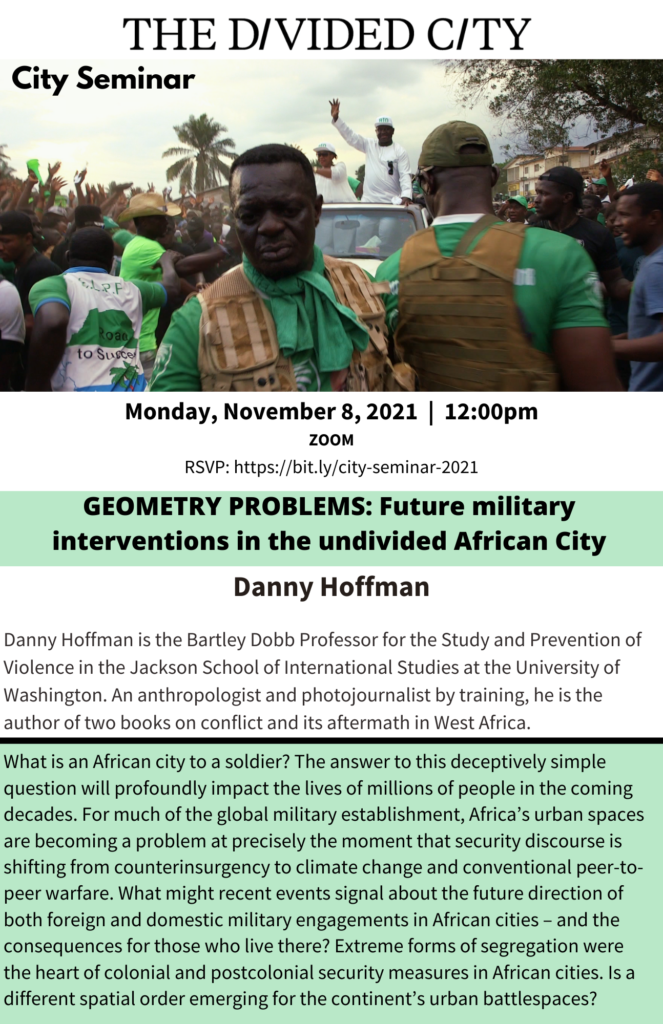
“Geometry Problems: Future Military Interventions in the Undivided African City” with Danny Hoffman
Wednesday, November 8th, 2021 | 12:00pm | Zoom
“Marking Time: Art in the Age of Mass Incarceration” with Nicole Fleetwood
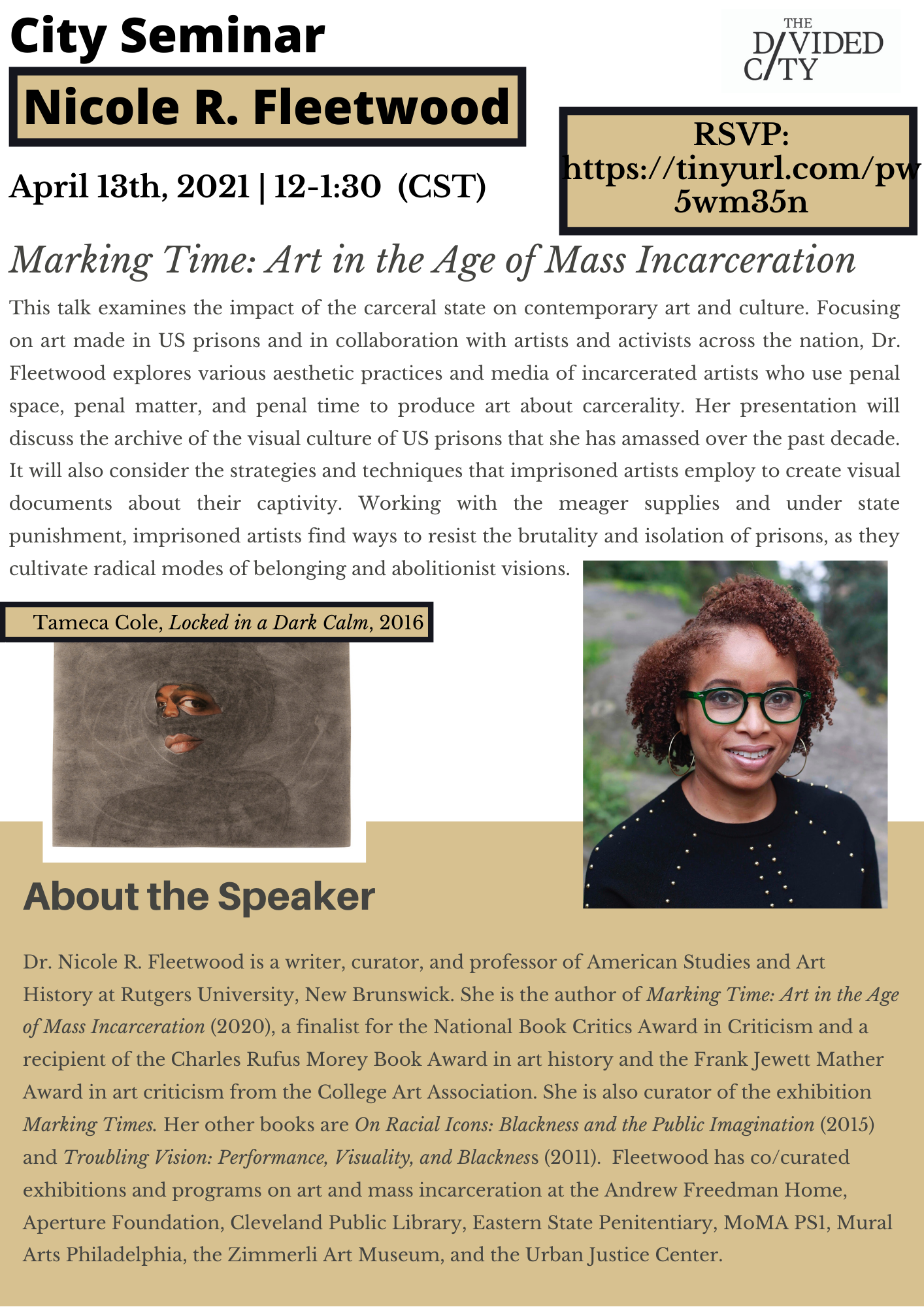
Dr. Nicole R. Fleetwood is a writer, curator, and professor of American Studies and Art History at Rutgers University, New Brunswick. She is the author of Marking Time: Art in the Age of Mass Incarceration (2020), a recipient of the National Book Critics Award in Criticism and a recipient of the Charles Rufus Morey Book Award in art history and the Frank Jewett Mather Award in art criticism from the College Art Association. She is also curator of the exhibition Marking Time, regarded as one of the most important moments in art 2020 by the New York Times and one of the best shows of 2020 by the New Yorker. Her other books are On Racial Icons: Blackness and the Public Imagination (2015) and Troubling Vision: Performance, Visuality, and Blackness (2011). She is also co-editor of Aperture magazine’s “Prison Nation” issue, focusing on photography’s role in documenting mass incarceration, and co-curator of Aperture’s touring exhibition of the same name. Fleetwood has co/curated exhibitions and programs on art and mass incarceration at the Andrew Freedman Home, Aperture Foundation, Cleveland Public Library, Eastern State Penitentiary, MoMA PS1, Mural Arts Philadelphia, the Zimmerli Art Museum, and the Urban Justice Center. Her work has been supported by the Rockefeller Foundation’s Bellagio Center, NYPL’s Cullman Center for Scholars and Writers, ACLS, Whiting Foundation, the Art for Justice Fund, Denniston Hill Residency, Schomburg Center for Scholars-in-Residence, Andrew W. Mellon Foundation, and the NEH.
A recording of this lecture can be found in the Divided City Video Archive.
April 13, 2021
“Building Educational Justice in Alabama Prisons: What’s Love Got to Do with It?” with Kyes Stevens

With over twenty years of experience in prison arts and education innovation and administration, Kyes Stevens is a national leader in the field. Stevens is founding director of the Alabama Prison Arts + Education Project, one of the most esteemed and longest-running arts and education programs in the country offering equal access to sustained and quality educational experiences to those incarcerated in state prisons. She continues to work with peers from around the country to develop strategies for arts and higher education in prison programs, and serves as a consultant and advisor to institutions of higher education.
A video recording of this lecture can be found in the Divided City Video Archive.
February 22, 2021.
“Global Displacement and Local In-Placement: Transnational Stories of Rustbelt Revitalization” with Faranak Miraftab
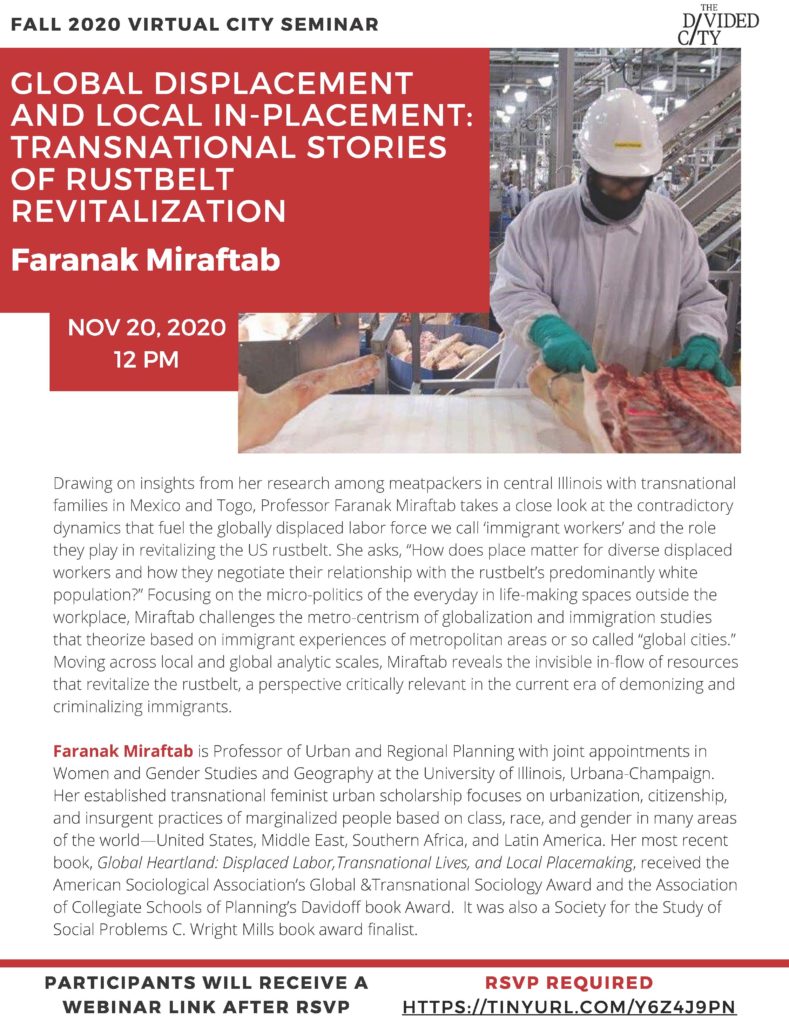
Drawing on insights from her research among meatpackers in central Illinois with transnational families in Mexico and Togo, Professor Faranak Miraftab takes a close look at the contradictory dynamics that fuel the globally displaced labor force we call ‘immigrant workers’ and the role they play in revitalizing the US rustbelt. She asks, “How does place matter for diverse displaced workers and how they negotiate their relationship with the rustbelt’s predominantly white population?” Focusing on the micro-politics of the everyday in life-making spaces outside the workplace, Miraftab challenges the metro-centrism of globalization and immigration studies that theorize based on immigrant experiences of metropolitan areas or so called “global cities.” Moving across local and global analytic scales, Miraftab reveals the invisible in-flow of resources that revitalize the rustbelt, a perspective critically relevant in the current era of demonizing and criminalizing immigrants.
November 20, 2020
Facing Segregation: An Interdisciplinary Speaker & Discussion Series
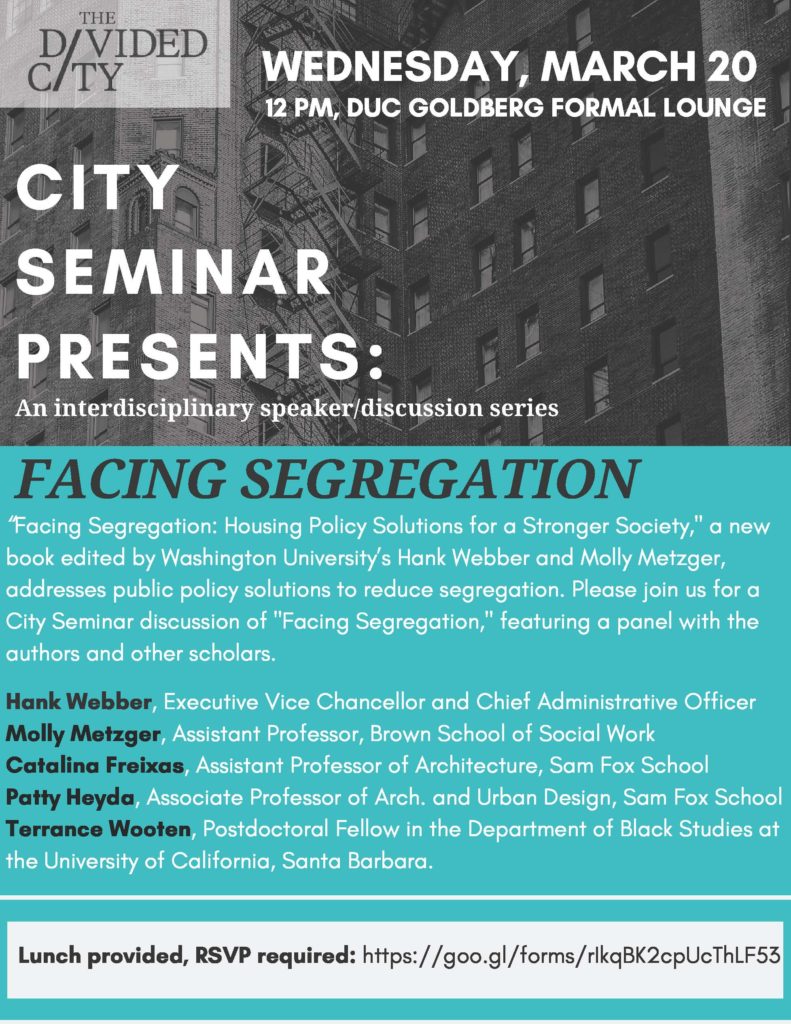
Facing Segregation: Housing Policy Solutions for a Stranger Society, a new book edited by Washington Unviersity’s Hank Webber and Molly Metzger, addresses public policy solutions to reduce segregation. Our City Seminar Speaker and Discussion Panel included Hank Webber, Molly Metzger, Catalina Freixas, Patty Heyda, and Terrance Wooten.
March 20, 2019
“The Conundrum of Gentrification: Five Questions for Historians” with Suleiman Osman

Gentrification is a conundrum. The word is one of the most controversial in American cities today. Newspaper articles and blog posts that decry or defend gentrifiers abound. Yet few agree on how to define the term, why it happens or whether it is boon or curse for cities. In recent years, gentrification has begun to receive more attention from urban historians. But to study the history of gentrification, urban historians will have to deal first with difficult questions about an increasingly contested and protean term.
April 5, 2018.
Lecture Series: Architecture, Urbanism, & the Humanities

In 2018, Divided City presented a lecturer series on Architecture, Urbanism, and the Humanities. Topics ranged broadly, from histories of metal in Caribbean cityscapes, minor architecture in Rwanda, histories of gentrification, surveillance of black sex offenders in homeless shelters, and segregation in the United States’ housing market. Featured speakers included the following scholars:
Terrance Wooten, Mark Steinberg Weil Early Career Postdoctoral Fellow, Washington University
Amanda Williams, Princpal, aw | studio; Visiting Associate Professor of Architecture, Cornell University
Germane Barnes, Director, Studio Barnes; Senior Lecturer in Architecture, University of Miami at Coral Gables
M. Surry Schlabs, Designer and Principal, studio 542, Leed AP
Paige Glotzer, Prize Fellow in Economics, History and Politics, Harvard University
Samuel Shearer, Mark Steinberg Weil Early Career Postdoctoral Fellow, Washington University
Kimberley McKinson, Post-Doctoral Research & Teaching Associate, University of Georgia
February 9-28, 2018
“‘There’s No Place to Rest’: Transience, Debility, and the Management of Homelessness” with Terrance Wooten
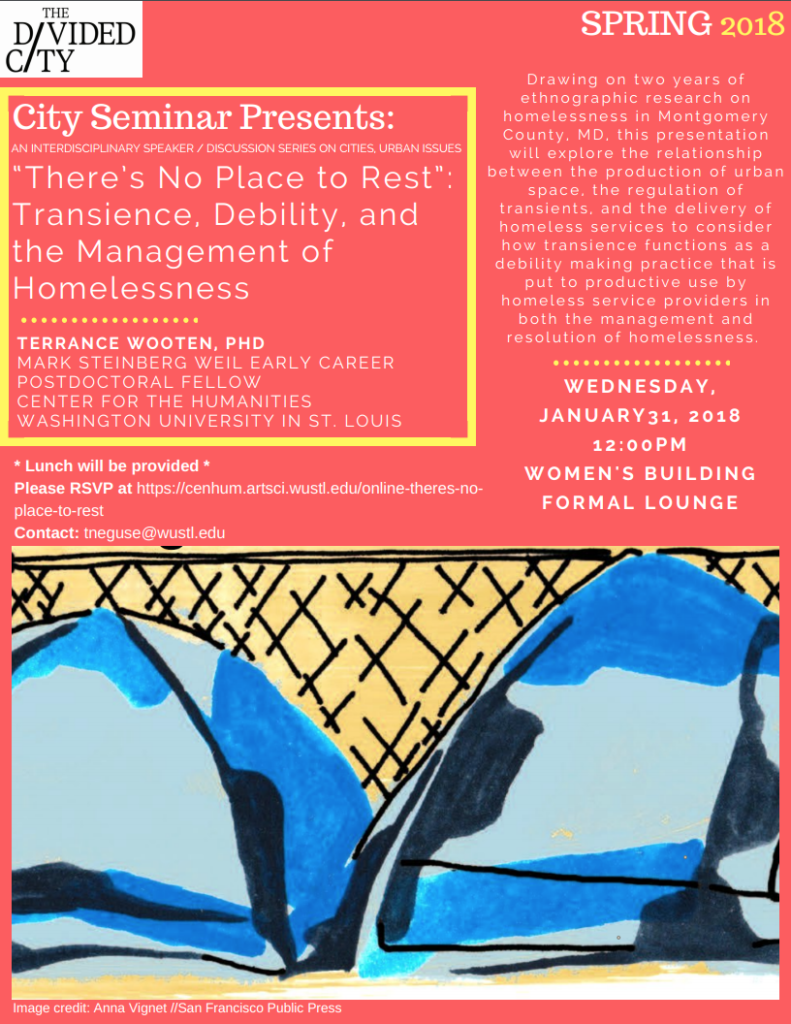
January 31, 2018
“Sense & the City” with Neil Goldberg
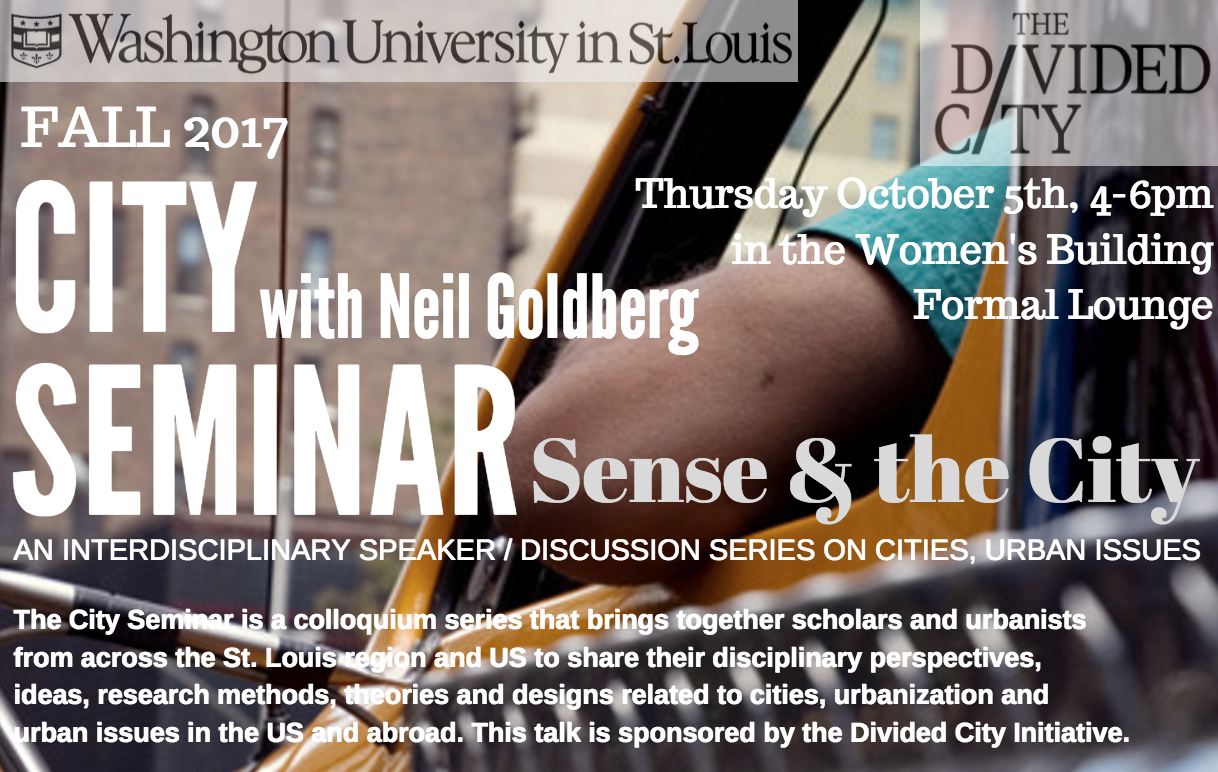
In this lecture and participatory workshop, artist Neil Goldberg shares his photography and video work, which documents the spaces and cadences of ordinary urban experience, and offers a series of sense-based exercises for more richly perceiving the environments we inhabit.
October 5, 2017.
“Beyond the Binary” with Liz Ogbu
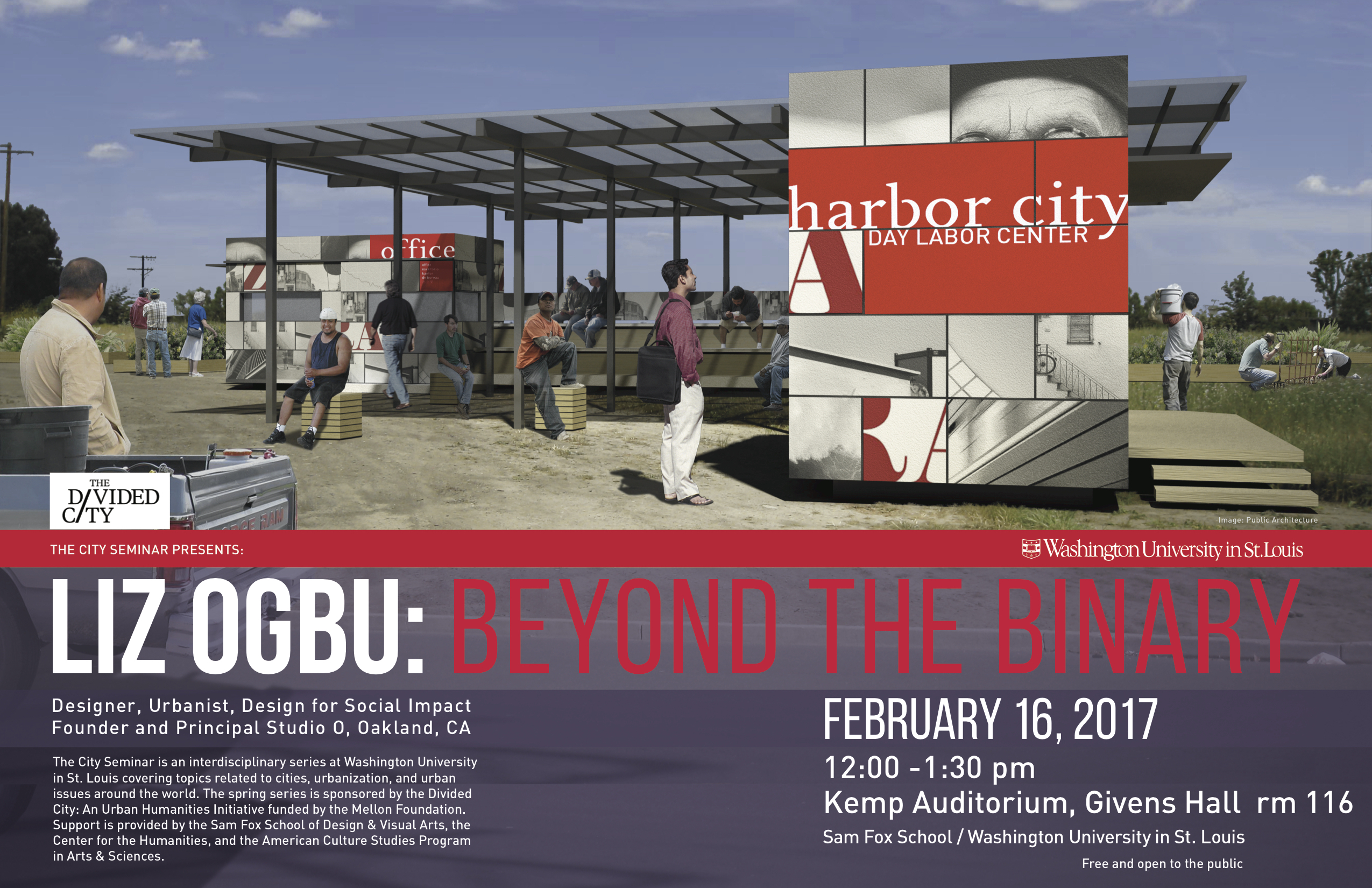
Liz Ogbu, Liz Ogbu is an expert on sustainable design and spatial innovation in challenged urban environments globally. She is founder and principal of Studio O, an innovation firm that works with communities in need to use the power design to deliver deep social impact.
February 16, 2017.
“Politics and the City”: City Seminar 10 Year Anniversary Roundtable Discussion
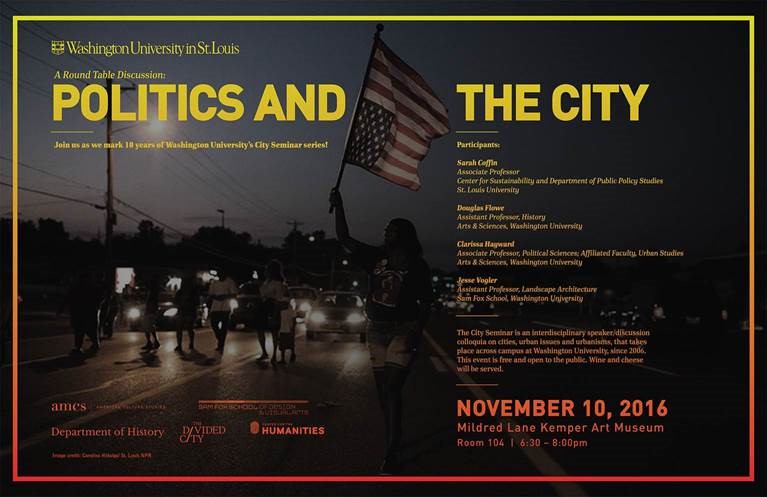
Sarah Coffin, Associate Professor for the Center for Sustainability and Department of Public Policy Studies, St. Louis University
Douglas Flowe, Assistant Professor of History, Washington University
Clarissa Hayward, Associate Professor of Political Sciences and Affiliated Faculty with Urban Studies, Washington University
Jesse Vogler, Assistant Professor of Landscape Architecture at the Sam Fox School, Washington University.
A recording for this lecture can be found in the Divided City Video Archive.
November 10, 2016.
“Creating the Lung Block: Racial Transition and the Making of the ‘New Public Health’ in a St. Louis Neighborhood” with Taylor Desloge
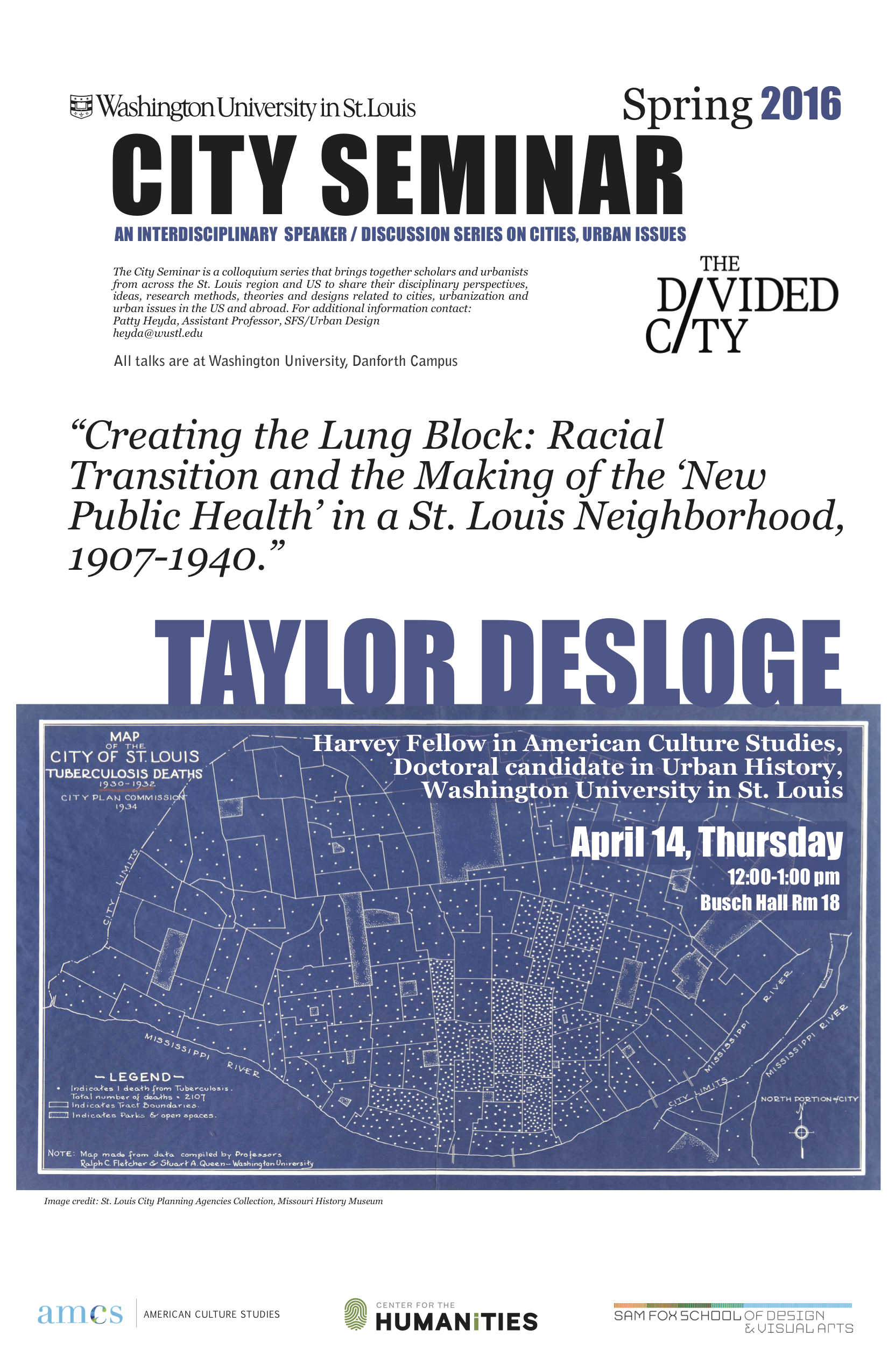
Taylor Desloge, Harvey Fellow in American Culture Studies and PhD Candidate in Urban History, Washington University.
A recording for this lecture can be found in the Divided City Video Archive
April 14, 2016.
“Urbanization: Towards a new conceptual cartography” with Neil Brenner
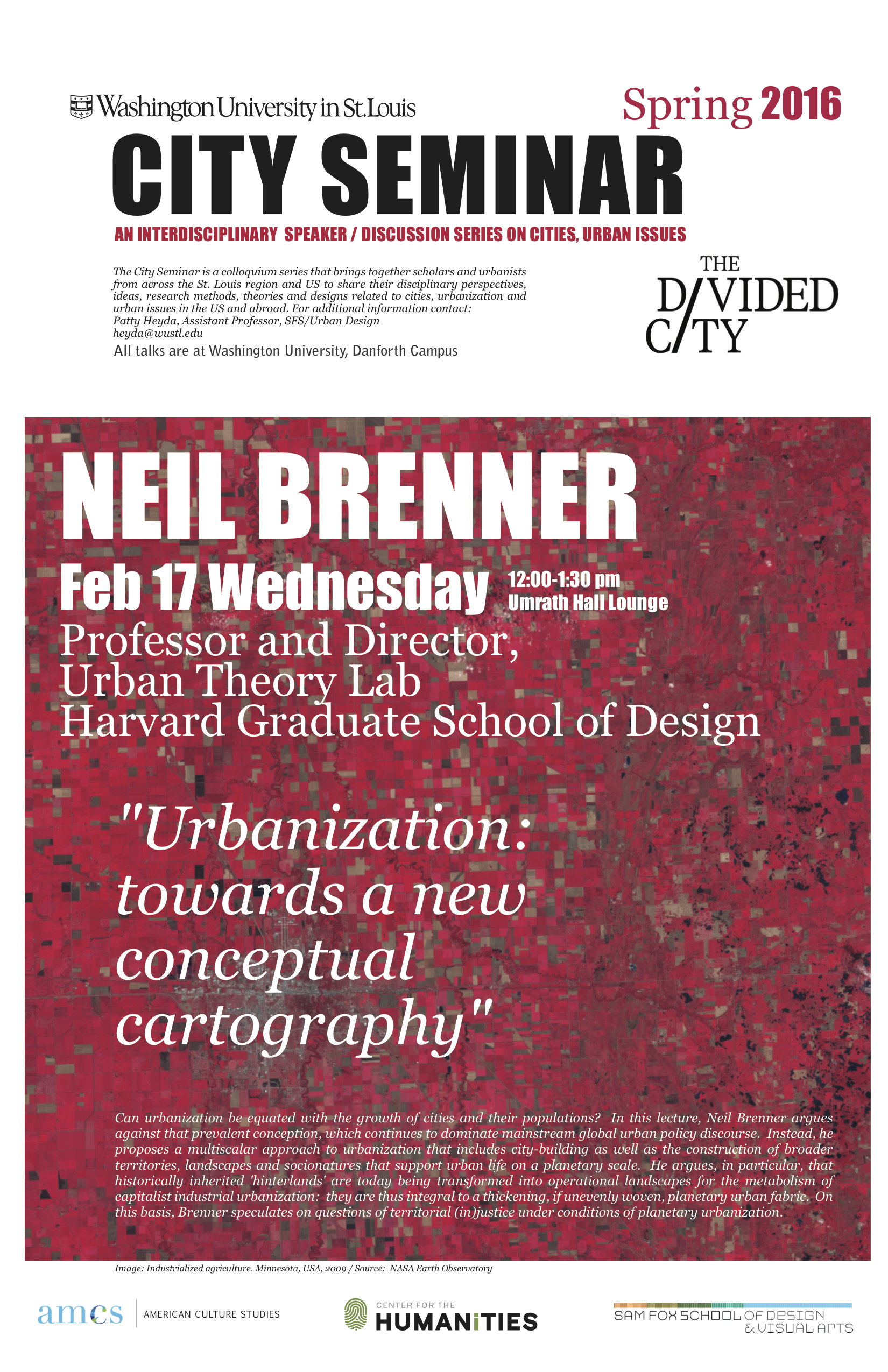
Neil Brenner, Professor of Urban Theory and Director, Urban Theory Lab, Graduate School of Design, Harvard University.
February 17, 2016.
“The Metamorphic City: Eco-urbanism and quality of life in post-industrial cities” with Catalina Freixas

Catalina Freixas Assistant Professor of Architecture, Washington University.
October 22, 2015.
“At the Risk of Seeming Ridiculous: Recasting ‘Black Lives Matter’ in the Contemporary Popular Imagination” with Garrett Duncan

Garret Albert Duncan, Associate Professor of Education and African and African-American Studies, Washington University.
A recording for this lecture can be found in the Divided City Video Archive.
October 8, 2015